Weaving Embers
Fawn Douglas Creates Community Brighter Than Neon
By Heather Lang-Cassera
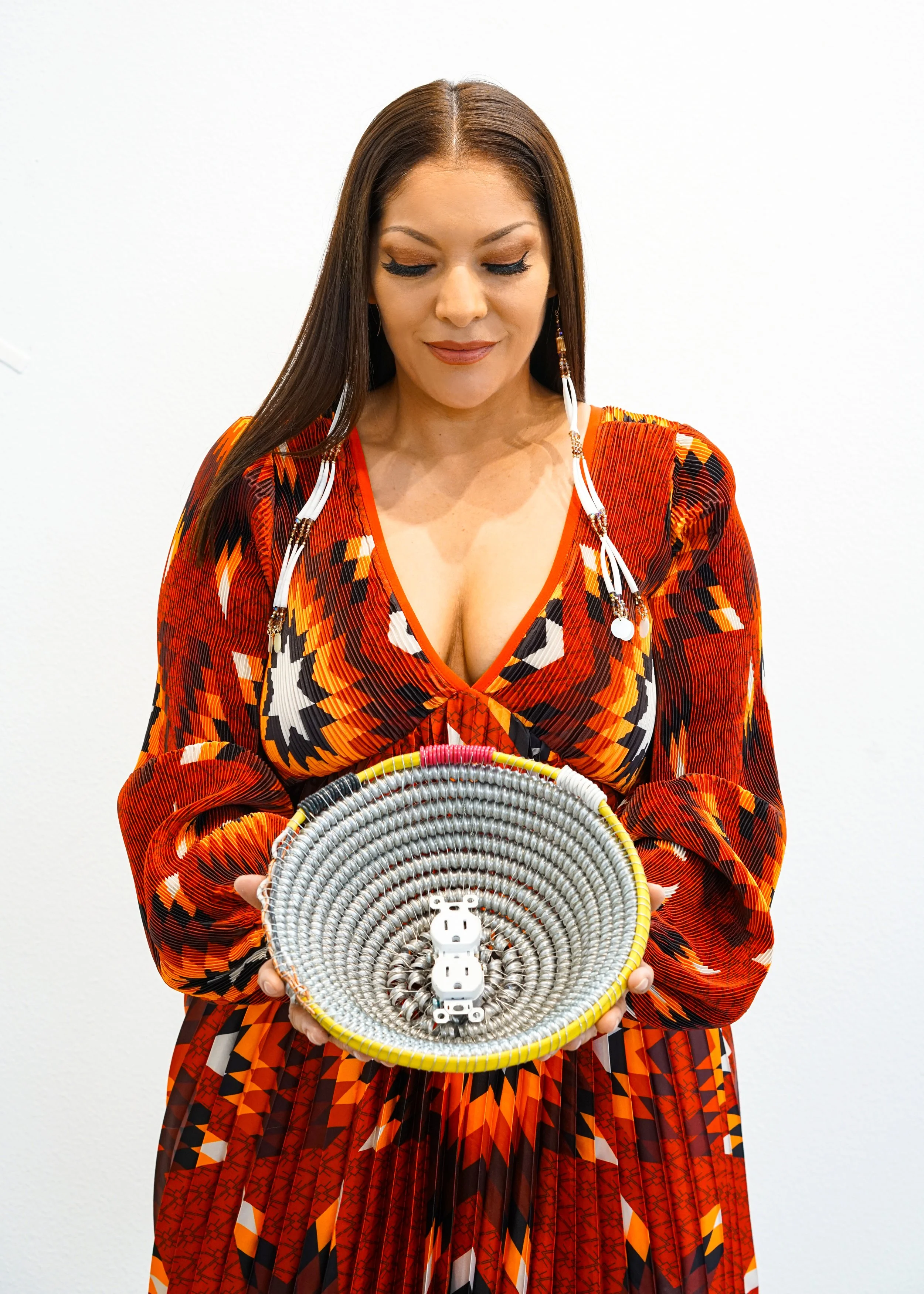
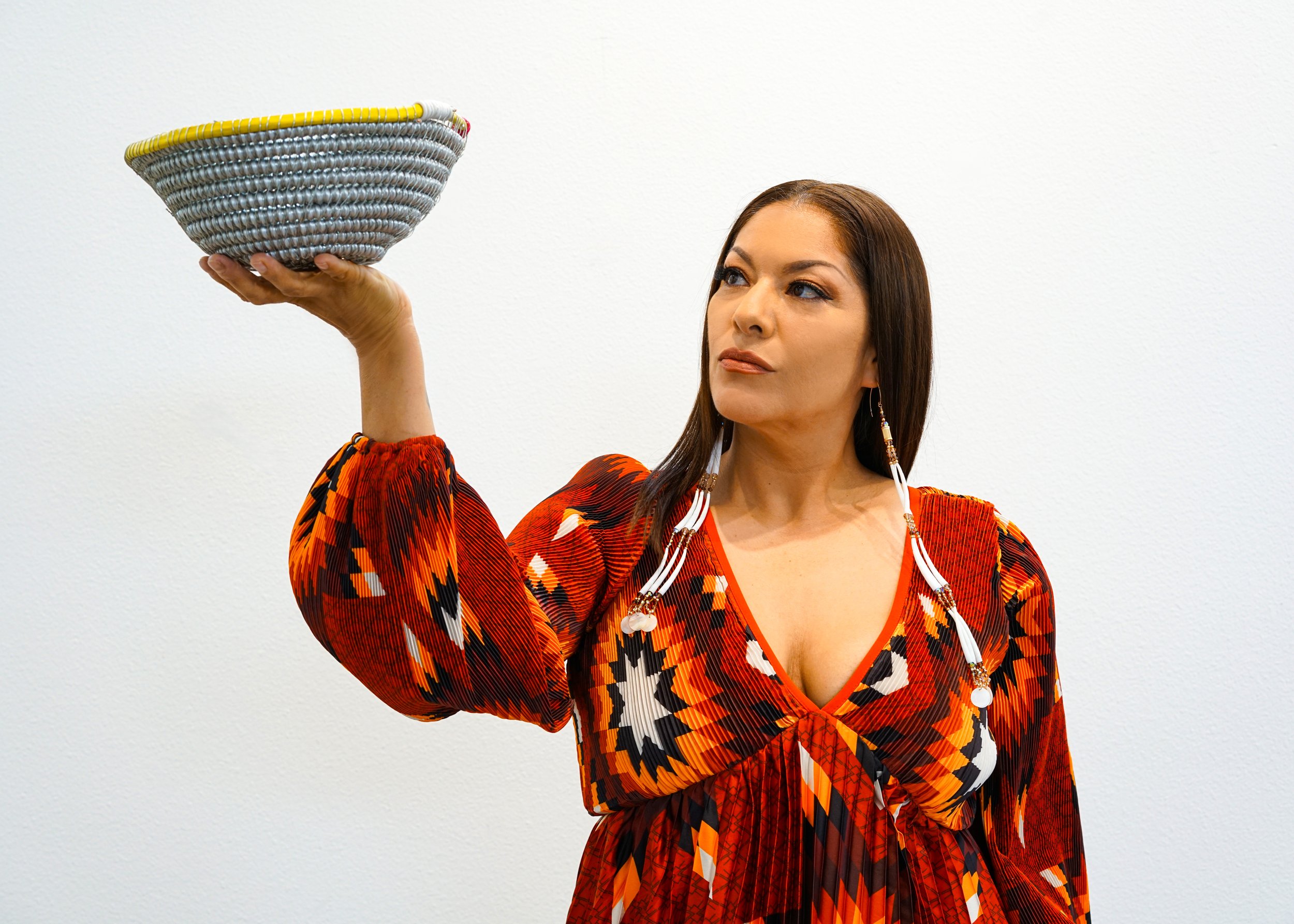
Fawn Douglas with her piece, “Power—Nuwuvi Basket IV” made from mixed media, conduit wire, plastic coated copper wire and an outlet collected from around the NUWU Art & Activism Center in 2022.
It’s late summer 2025 and I’m greeted by a bloom of buildings as I walk up Maryland Parkway, just south of East Franklin Avenue. Each is painted a different color. Every hue is stunning. I feel as if I’m back in Avi Kwa Ame in springtime, practicing close looking-at, and writing poetry about the mosaicked desert floor. Yet, in the heat of this August, I’m standing here, a few blocks from my home, in the heart of a city of millions. This enclave of buildings is the Nuwu Art + Activism Center founded by Fawn Douglas and A.B. Wilkinson.
The first building is a gorgeous cactus green, a nod to the local flora. This space hosts Nuwu Art Studios where you can find artists practicing their craft, such as Avis Charley, Xochil Xitlalli, Juan Cuevas (Quetzal Visions), Haide Calle, Sol K. Martinez, Theo Tso and previously Ben Alex. You’ll likely recognize these names. For example, Xochil and Juan’s work was featured in the juried outdoor art exhibition, “Haven,” at the Clark County Wetlands earlier this year, and Ben-Alex (who works with the studio from afar now) is an award-winning director who produced an award winning film with Fawn and A.B. called “Nuwu Means the People”.
Nestled just behind that first building is a casita, once home to a mikveh. Painted in brilliant blue turquoise, this structure honors water. “We knew this was a place where there was healing waters, of course with the Jewish faith, but also water is life to us,” says Fawn, who, in addition to directing the Nuwu Art + Activism Center, is an Indigenous American artist, activist and an enrolled member of the Las Vegas Paiute Tribe. This building serves as the workshop space for IndigenousAF, the center’s sister nonprofit, for which Fawn serves as secretary. She explains, “when we first got these spaces, people liked what we were doing and wanted to support us.” With advice from elders and other members of the community, Fawn and A.B. started this nonprofit to support programming, exhibitions and more.
Formerly a synagogue, one of the buildings is a vibrant purple, and it’s the color about which Fawn lights up the most. “One of my idols is Jean LaMarr, and that artist wears purple everything, paints a lot of purple, and it’s just one of those happy colors. It was one of my grandmother’s favorite colors, too.” Fawn also tells me about its significance to East Coast Native communities, the purple woven into wampum belts and treaties.
This building is the Nuwu Art Gallery + Community Center, which hosted the “Mawnuhk” exhibition, celebrating the founding of the center and its five years of creative liberation. In early spring of 2020, when Fawn and A.B. founded the center, the street was filled with shades of beige. They wanted to make a statement, “Hey, there’s people of color here. This is a vibrant, growing space.” Everything Fawn does, she does with intention.
The gallery is currently showing Brian Martinez’s first solo show, “Cosmic Chicano,” an exploration of Mexican American identity through the lens of the mythical, the ancestral—and the now. “Brian is definitely moved by this current time and feeling a need to paint and really record what’s going on now, or who we are, who he is, his background,” Fawn says, explaining how Brian’s work aligns with the vision of the center. “Cosmic Chicano” is sponsored by IndigenousAF and the Andy Warhol Foundation for the Visual Arts.
An excellent time to visit NUWU exhibitions is on the final Friday of the month, when Fawn and A.B. welcome folks to join them from 5 to 8 p.m. for food, community and an art project. During my last visit, there were mouthwatering tacos, and collaging further brought the community together.
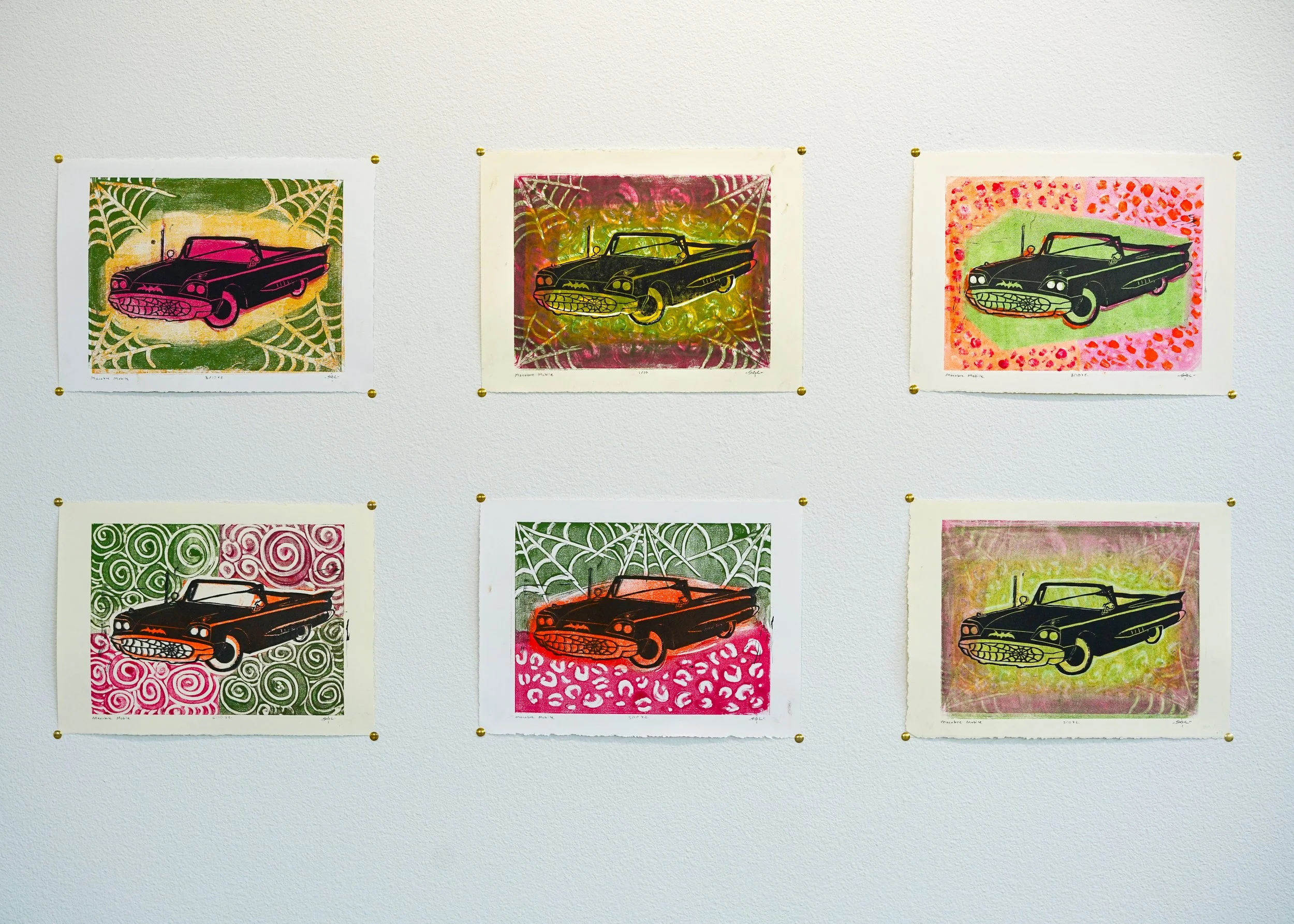
“Macabre Mobiles”—Monotype/Relief Print by Sol Martinez. While this isn’t Fawn’s work, Sol is Fawn’s masterpiece, her daughter.
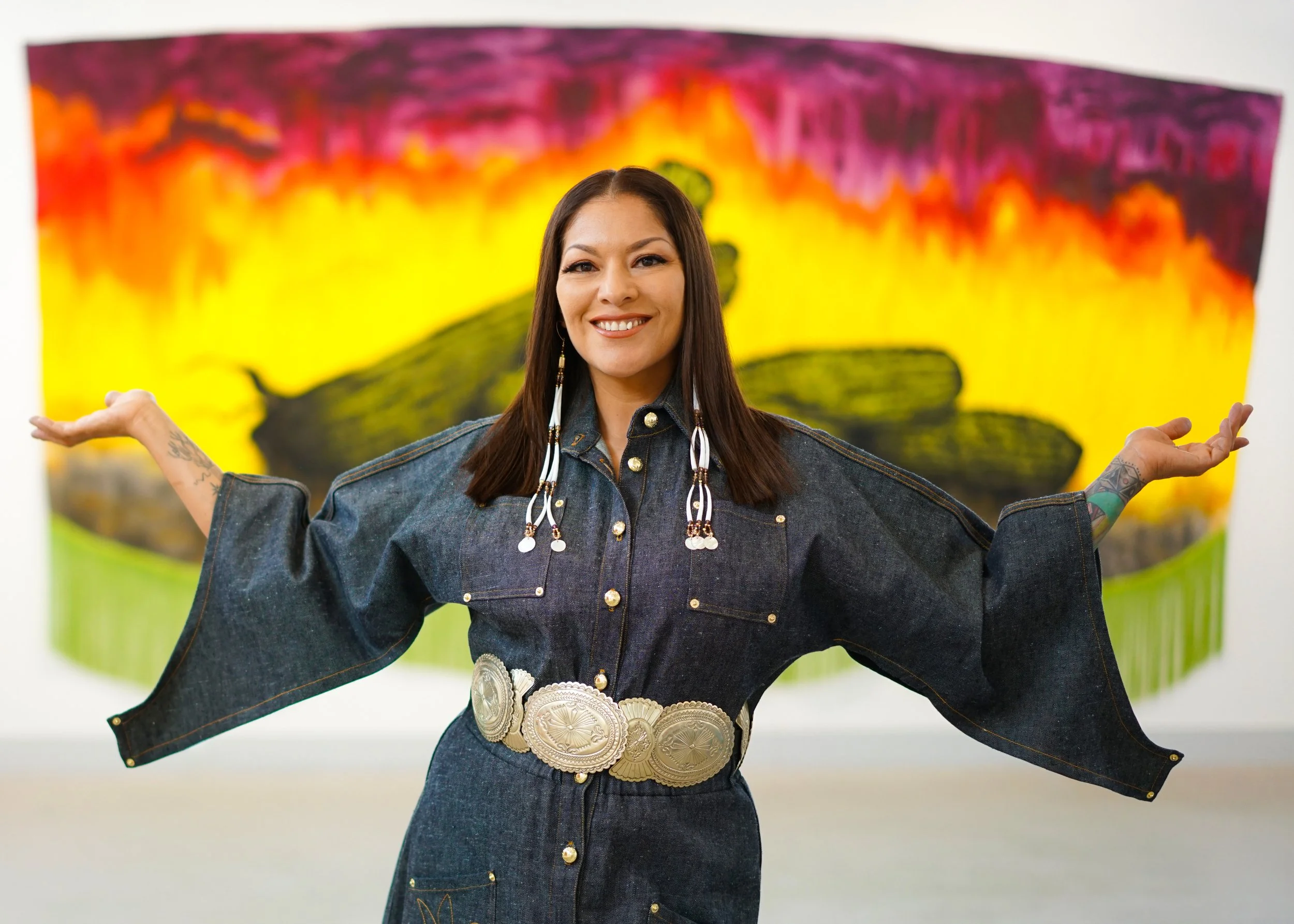
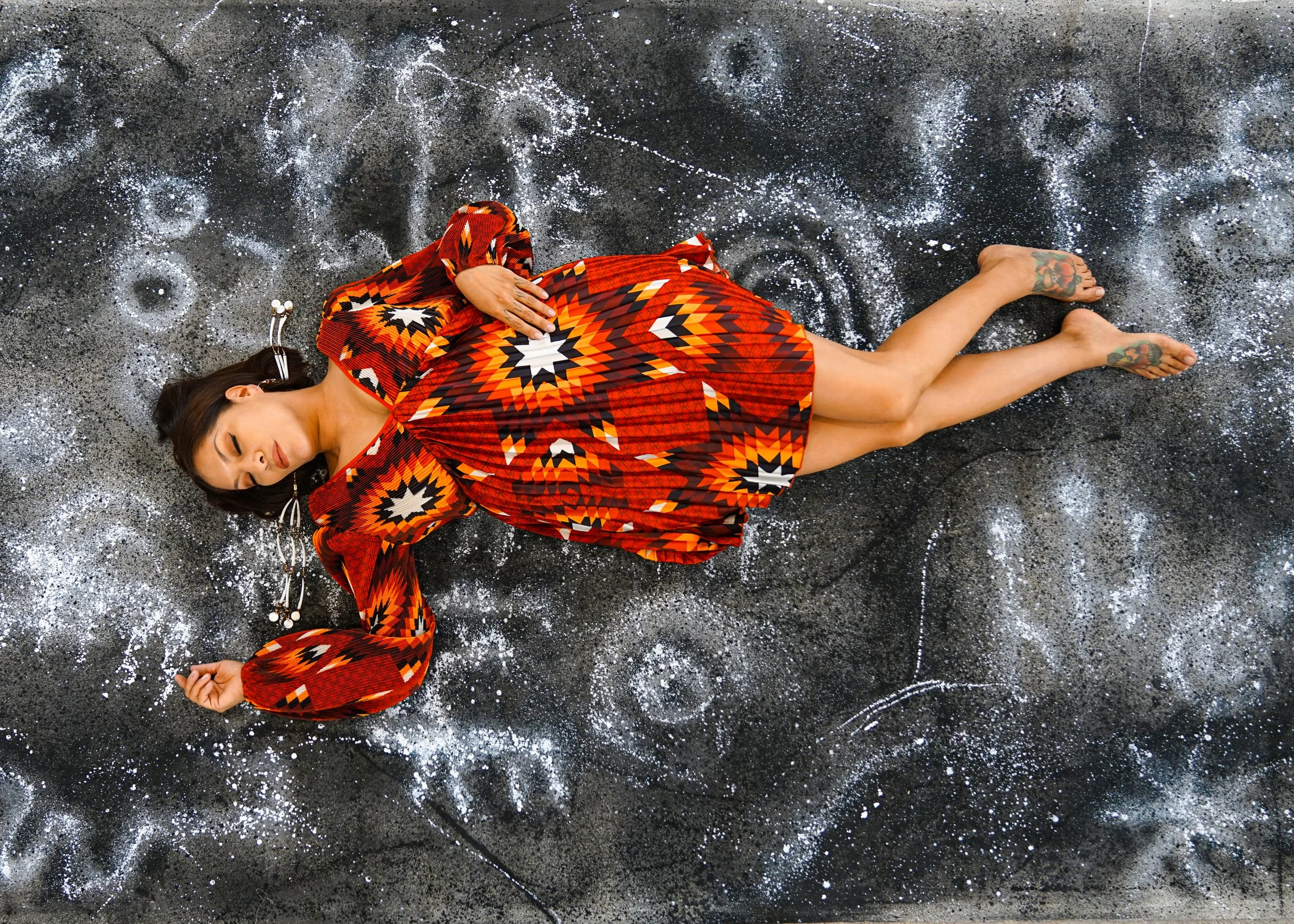
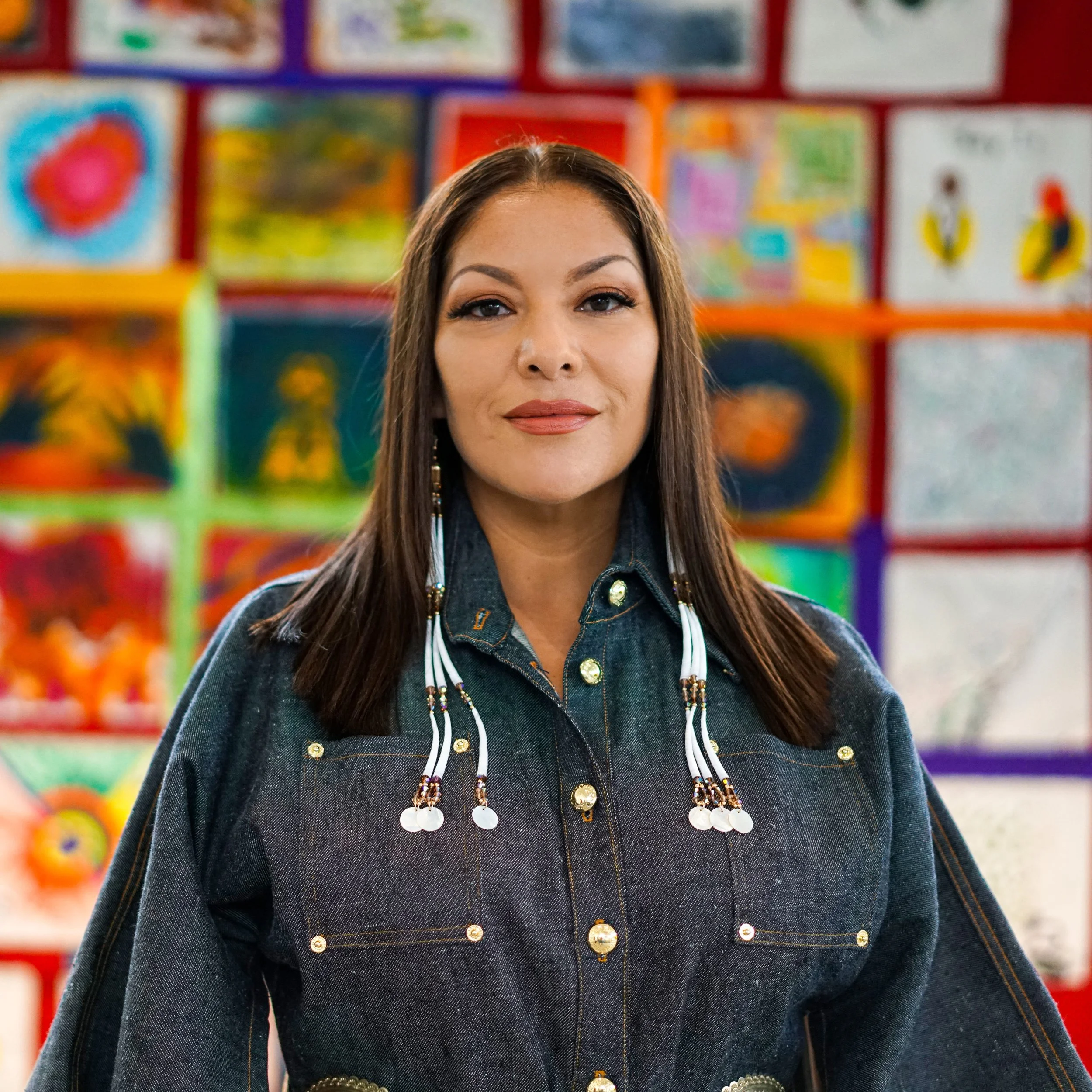
It is in this space, with some dazzling late-morning light, that Fawn and I chat about the Nuwu Art + Activism Center and the small, yet significant, joys in life, such as the triple-strand chandelier earrings she will wear later in the day. Of course, I immediately notice the purple accents, while the longer beads reflect the eloquence of Fawn’s intentionality. The symmetry of the earrings evokes the balance that Fawn seems to maintain in her art and her activism, in honoring both the heavy and the joyful, and in Fawn’s commitment to outward service and her more private heart work as guided by her elders. The length of these earrings seems to ground us in our bodies and the physical space, while also branching out, reminding me of the importance of connection and community. Unsurprisingly, this exquisite jewelry is made next door, crafted by Dakota/Diné artist Avis Charley in her studio. When I visit, Avis is putting the finishing touches on a lifelike painting for a particularly renowned museum.
A fourth building is a blazing orange, a color that could set any heart aflame. Fawn participated in the #NoDAPL protests at the Standing Rock Lakota (Sioux) Reservation. “Take this ember home,” Fawn says. She remembers being urged to bring the spark of that movement back to her local causes. The call to carry these lessons of protecting water and community stayed with her. While browsing through color palettes at a home improvement store, she found a shade called Ember.
Fawn’s purposeful approach extends to her art. She’s skilled in many techniques, including painting with watercolor and gouache. However, she feels most connected to weaving. “Natural materials and learning basket weaving and traditional ways, that has really been on my heart and my mind,” Fawn says, “because my daughter has been asking about them. Our community, youth are asking about them.” She continues, “Here we are in the city, and a lot of our foraging spaces are gone.” Fawn, however, often weaves with metal. She has made several baskets from the center’s construction trash pile alone, honoring the past, celebrating the present and looking to the future.
I’ll be thinking about my conversation with Fawn for years to come. She’s someone I have admired from afar for quite some time, both for her art and activism, and for her ability to balance both. As we chatted, she sat on a dark teal, midcentury modern sofa not far from a breathtaking tapestry. “Seeds,” one of her own works, is based on a New York Times photo of saguaros, which were bulldozed and left to die in the construction of the border wall. These cacti lay amidst the ashes. Fawn and I share a quiet moment of exhaustion over the ways in which people, the arts and the land have been suffering. Beside Fawn, her tapestry hangs loosely, which is deliberate and symbolizes deterioration.
She says, “Just like anything that grows, you know, things also come to an end, and there’s regrowth, too.” The world appears to be on fire, yet Fawn shows us that amidst the flames, there are sparks of hope and, always, that unmatchable desert sunrise.
***
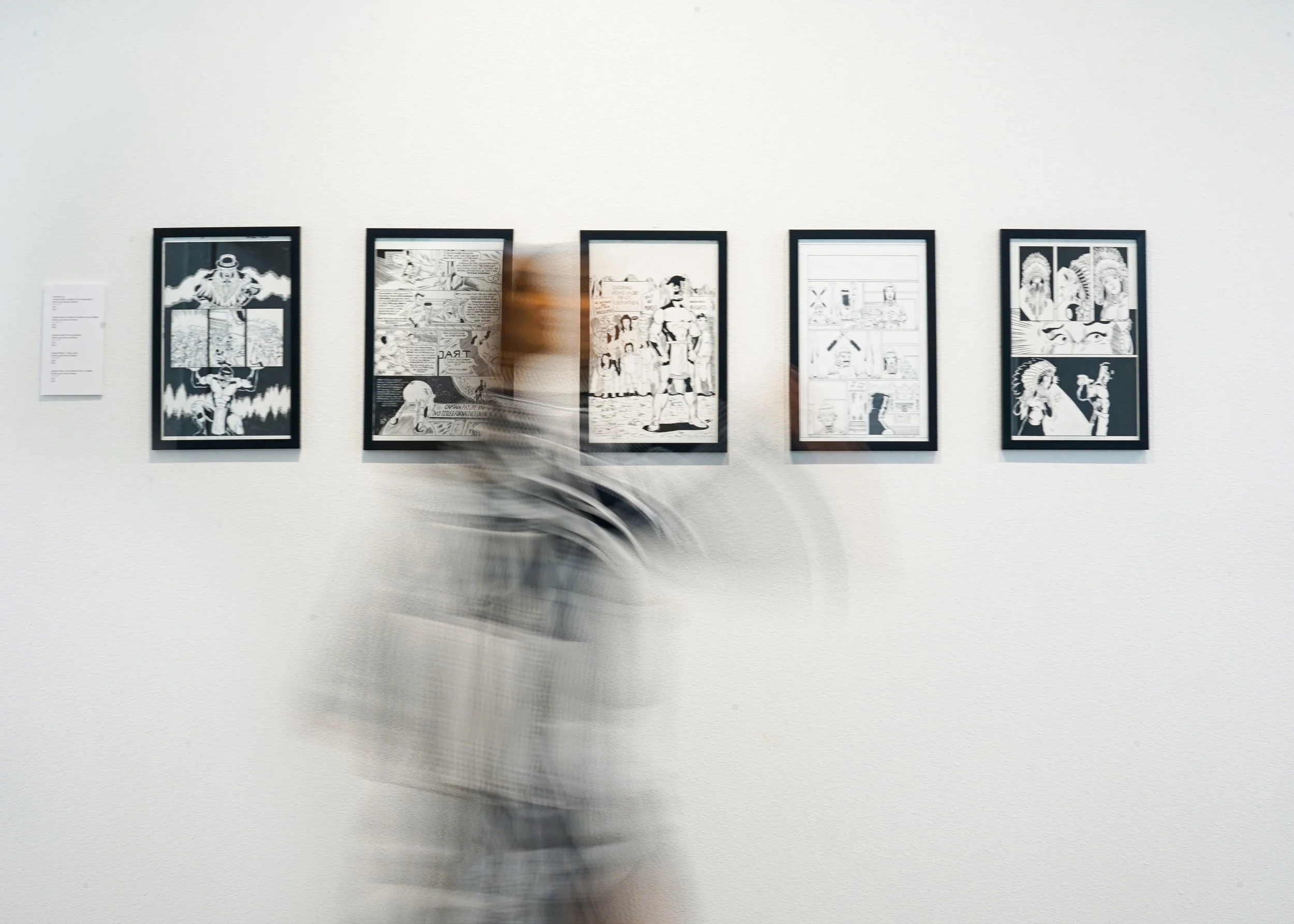
In addition to their Maryland Parkway location, Nuwu Art and IndigenousAF will open a fine arts gallery and retail store in the Las Vegas Arts District. They sourced Great Basin and Southwest art to be featured in the space, including work by Jean LaMarr, Cara Romero and Diego Romero, among Nuwu Art Collective members and more.
“People are wondering about Native arts,” Fawn says. “They’re curious about it, and unfortunately people have the stereotypes to look at, but we’re bringing something very different, these works by inspired Native peoples, not the stereotypes.”
The store’s proceeds will fund IndigenousAF, a nonprofit dedicated to preserving culture and empowering futures. Until they open their new gallery, visit the NUWU online store to support the work they’re doing. Purchase a hat, T-shirt or sticker, or become a member and enjoy special rewards and exclusive viewings.
Heather Lang-Cassera served as the 2019-2021 Clark County, Nevada Poet Laureate and was a 2022 Nevada Arts Council Literary Arts Fellow. She teaches Creative Writing at Nevada State University, serves as poetry editor for Black Fox Literary Magazine, and is on editorial staff with Raleigh Review. Heather's poetry collection, Gathering Broken Light, won the 2022 NYC Big Book Award in Poetry: Social/Political. Her newest collection, Firefall, was named a 2025 NYC Big Book Award Distinguished Favorite in Poetry: Nature, Place, and the Environment. A multidisciplinary artist, Heather also works in ceramics, which have been exhibited in Nevada and Wyoming.