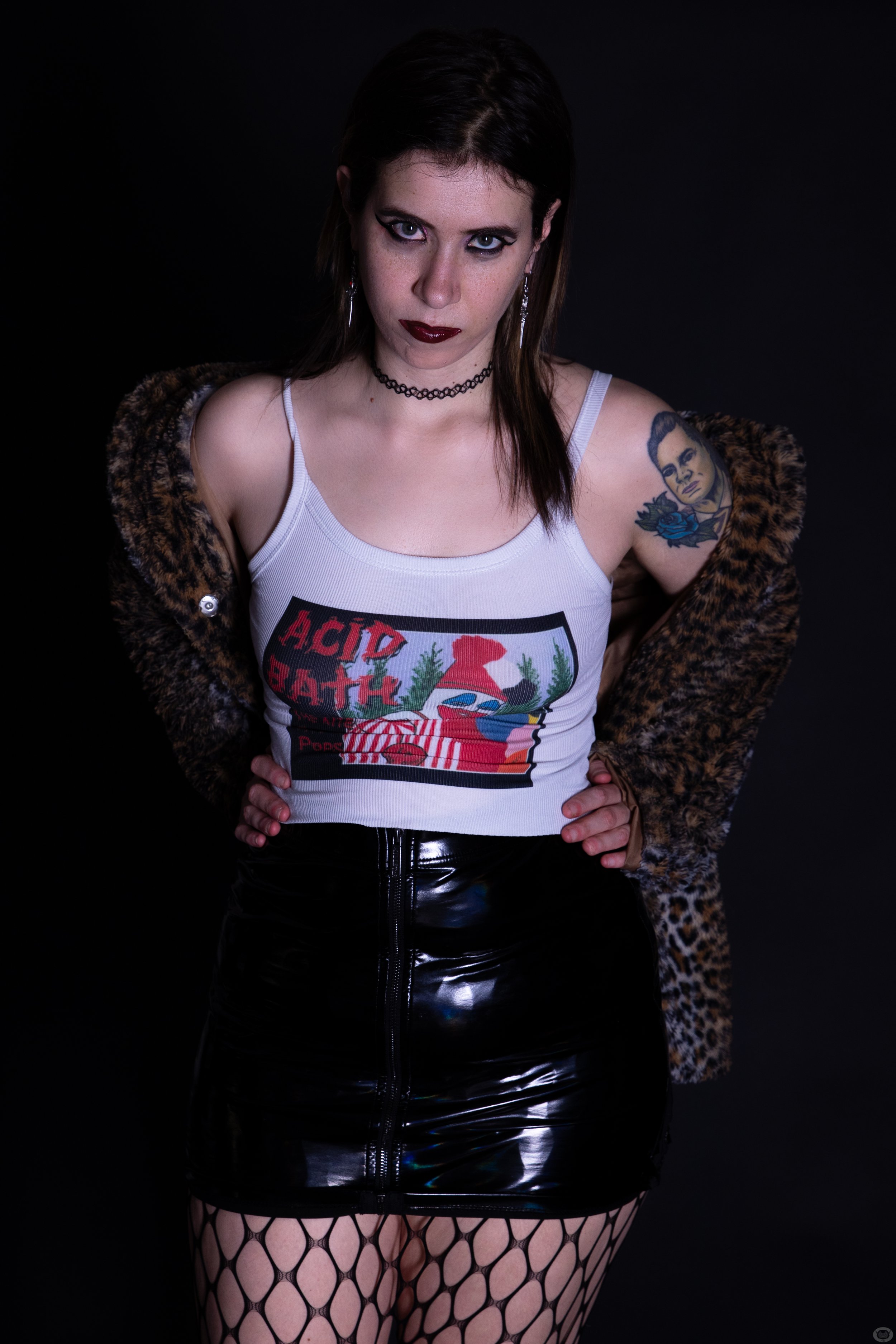
Rising Above: Punk, Purpose and the Power to Heal
A Survivors Journey Through Loss, Music and Rediscovery
By Kelly Stith | Photos by Tyler Boshard
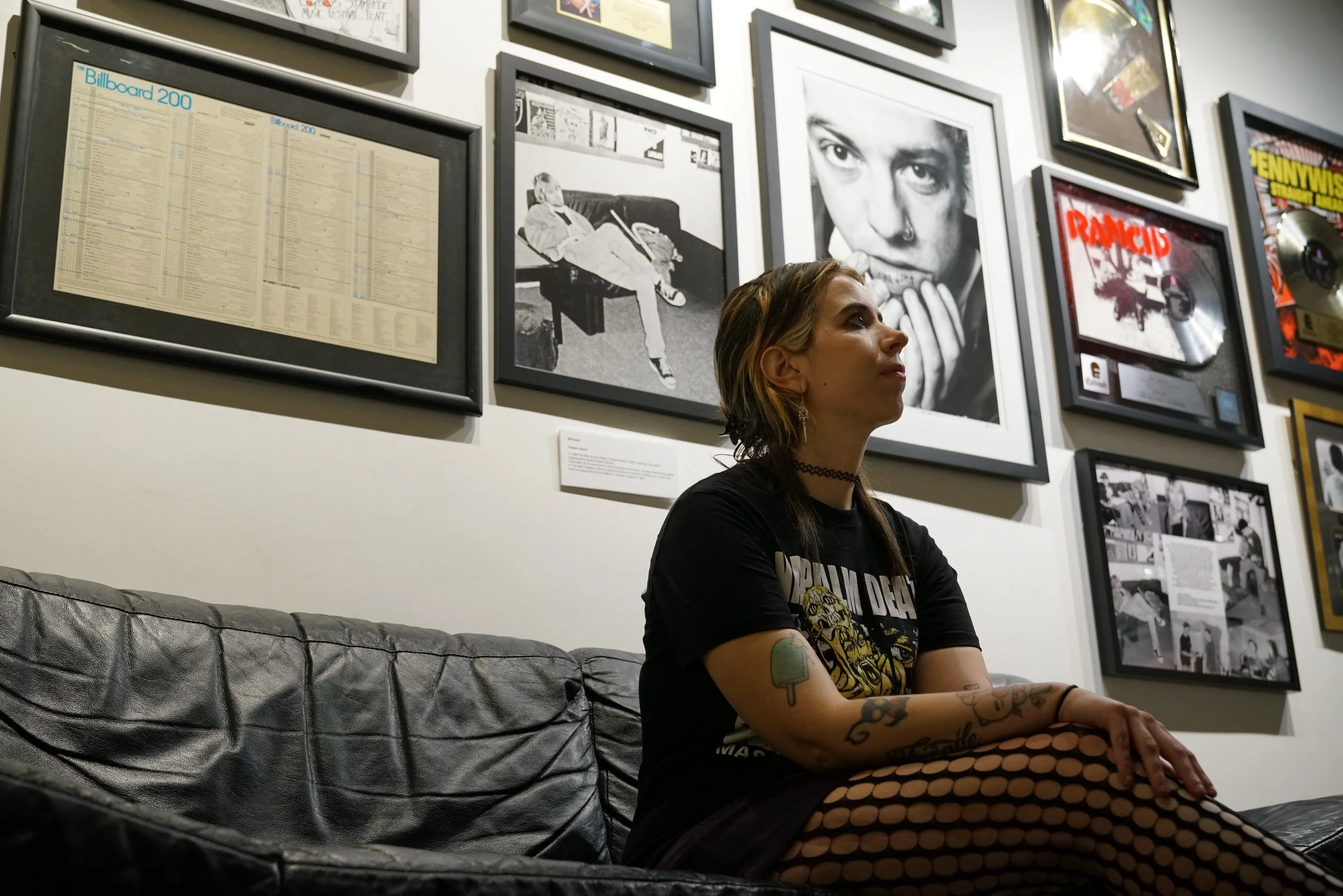
Kelly Stith at The Punk Rock Museum
Dec. 6, 2023—a day like any other at first. Walking out of my morning composition class, I headed to my car when I heard my phone buzz in my pocket. Glancing at the screen, I saw a text from my boyfriend: “Are you at UNLV right now???” Confused, I checked my email to see an update from the campus police services: “University Police responding to confirmed active shooter in the Frank and Estella Beam Hall. This is not a test. RUN-HIDE-FIGHT.” Though we lived in a society with an ever present threat of gun violence, I was stunned that it was happening so close to me. Still in shock, I sped over to my boyfriend’s house, my mind attempting to process everything as I drove in a state of highway hypnosis, not recalling how I had arrived. We spent the day fixated on the news, switching between channels for the latest breaking news on the mass shooting.
As I sent messages checking in on my friends and colleagues, a deep and utter numbness set in. As a professor and someone who cared deeply about the community, survivor’s guilt overwhelmed me: I reached safety while others were stuck on campus in lockdown, fearing for their lives. Three beloved professors were killed and a fourth wounded, suffering severe injuries and requiring months of hospitalization. I started to question the legitimacy of my feelings, to what degree was I allowed to affect when others were more deeply impacted?
In moments of hardship, I returned to bands such as Bad Brains, Black Flag and Discharge, which formed the soundtrack to my healing journey. I knew every day would not be easy, but punk music offered me courage and empowerment. I had thought I lacked those qualities—little did I know, they had been there all along; it just took the right person to reveal them to me.
I bought a ticket to meet Randy Blythe at The Punk Rock Museum, where he had been leading guided tours. Widely known for being the frontman for metal band Lamb of God, revisiting their records in the aftermath of the shooting gave me comfort. Randy’s openness in his books and interviews with his path to sobriety showed me that I did not have to rely on substances to give my life meaning.
Since the shooting, my PTSD had left me apprehensive about public spaces. Yet, I had long been an admirer of Randy's writing and photography—I couldn’t pass up the opportunity as it gave me something to look forward to and allowed me to focus on something other than my anguish. My boyfriend, however, imparted some sage words: “Remember, your only job today is to focus on having fun.”
Decked out in a leather winter coat with a furry hood, a Black Flag T-shirt and denim shorts with tights underneath, I pulled my rusting red Chevrolet Cobalt into the parking lot of the museum. I took a few minutes to gather my composure: I got this. Things will be ok. I’m here to have a good time and meet an artist I admire.
Restless with anticipation, I waited in a small room off the left side of the gift shop entrance, lined with framed portraits including Laura Jane Grace, front-woman of Against Me!, Poly Styrene, singer of X-Ray Spex, and Minor Threat. Randy came in, unassuming in a Corrosion of Conformity shirt and black hoodie, my trauma melted away: free. I could have a brief moment of peace and be among like-minded individuals just as passionate as I was. Randy did a fantastic job leading the tour with his warm, welcoming presence and a wealth of knowledge.
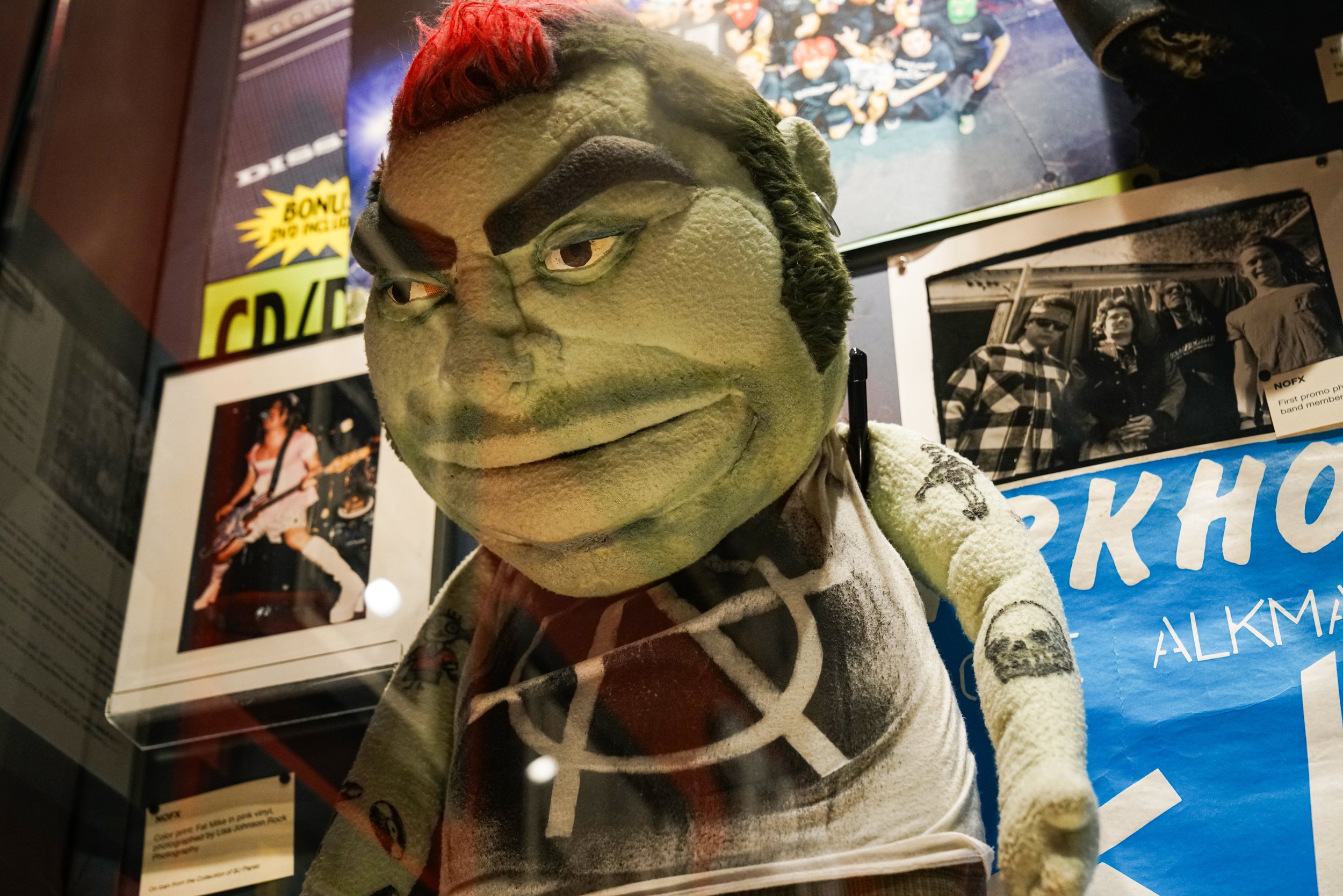
What’s up with this puppet? You’ll have to visit The Punk Rock Museum to find out!
Following the tour, he signed merchandise and took photos with attendees. As I stood in line, the pent-up emotions from the shooting came bubbling up, but I summoned all my strength and bravery to keep my composure. Walking up to Randy with my copy of his 2015 memoir “Dark Days,” I blurted out to him, “I’m a professor and there was a shooting at the university I teach at last month, it’s been really difficult, but your music, photography, and writing have been an inspiration.” As he signed my book, he grimaced at the news of the tragedy and mentioned, “I have a chapter about school shootings in my new book.” He asked what I taught, and I replied, “English, but I also do a lot of research and writing on music and film.” We chatted, took a picture together, and as I left, my trauma dissipated. The shooting was not at the forefront of my mind. I could focus on something other than my pain. Randy extended kindness to me, in a human moment, I felt seen and heard.
Later that night, as I laid down in my bed attempting to sleep, I unleashed a cathartic fury of tears. I had a day where I felt okay for once, yet a part of me was going through the motions, wondering why I deserved this. In the depths of my despair, however, I awakened to my true purpose and function: to use the role I do have in society as a writer and educator to make a positive difference.
***
In January 2024, with a fresh outlook, I felt ready to dip my toes back into the local scene again, but remnants of my anxiety lingered. Heading to The Dive Bar on Maryland Parkway for a punk show in remembrance of renowned fetish model Masuimi Max, nausea swelled inside me. I arrived at the bar and a friendly face came over and greeted me. His name was CJ, a local concert photographer and promoter for Scumbags Productions. His compassion and maturity at a mere 22 years of age left a lasting impression on me, and we maintained a cherished connection.
We reunited this year at a Starbucks across the street from UNLV. Sipping an iced caramel macchiato and wearing a red and blue striped Gulch shirt, CJ said “I always felt like an outcast, but I fully embraced it and what made me unique; I gave up on fitting in and went all in with the silliness and did stuff out of the norm.” By being true to himself, the spirit of community became a key part of his life. “All the people I met at shows had been through similar issues, and it’s comforting when there’s a camaraderie,” he told me, while also highlighting, “Everyone’s journey into the local scene is different.” It was okay to chart my own course, which had been an arduous process as a neurodivergent woman. Facing constant pressure to conform caused me insecurity and negative self-esteem. I constantly masked my autism to be considered “normal” and internalized self-hatred that I let fester. Punk served as a mechanism for growing more confident. For CJ, too, music helped him come out of his shell and to try and be less overwhelmed by the awkwardness he experienced from his autism.
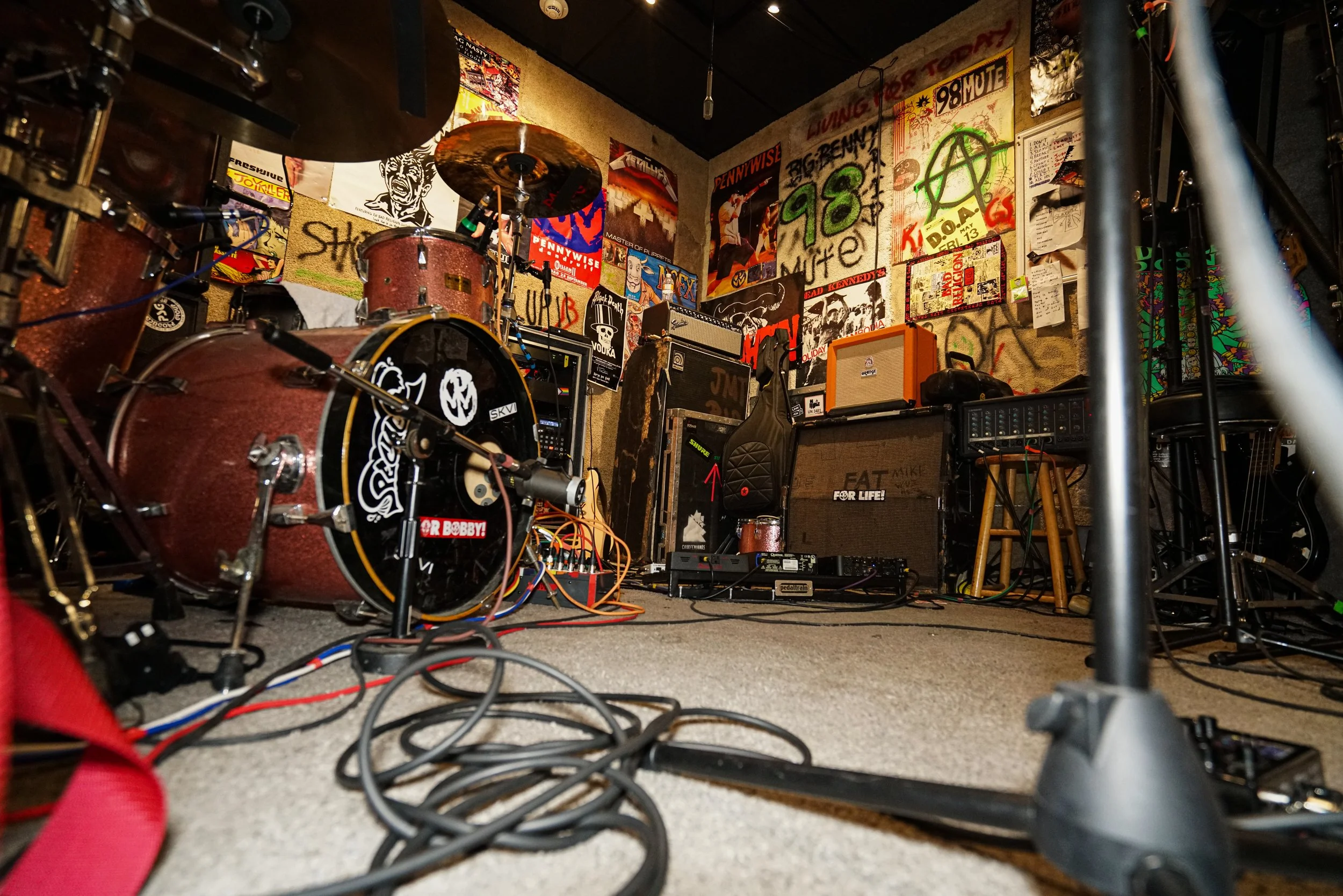
The Pennywise Garage at the Punk Rock Museum
Embracing new opportunities and a willingness to test boundaries was something I only came to understand at my lowest point. CJ concurred: ”Once I hit rock bottom, I got to be more open again.” After everything I had been through, it would have been easy to remain cynical and jaded, but I realized that if I wanted to heal, I needed to make an effort to be my authentic self. It led me to recognize that I was stronger than I had given myself credit for—and it was vital to be there for others. “Try to figure out what to help with around the scene or community. Be creative and do it for the love, not for the attention,” CJ urged. And it was through my work as a professor I could assist others in reaching their true potential.
***
Following the tragedy at UNLV, a student emailed me, writing, “As a nine-year Marine Corps veteran, I always felt very prepared. At the time of the UNLV incident, I was across the street working. I heard sounds I was very used to hearing, only this time I was completely helpless and unprepared.” One of my other promising students stopped coming to class entirely, disclosing, “With schools no longer being a safe haven, I’ve been anxious.” This devastated me, but, as bell hooks said in “Teaching to Transgress,” “the classroom remains the most radical space of possibility.” Educators could position academia as a place where one could thrive and build a better future.
I met with my colleague and fellow punk rock devotee Emily Hoover at Sunrise Coffee. Dressed in an orange crop tank top and black pants, with their hair in a loose bun and arms decorated in neotraditional tattoos, she said while drinking an iced matcha latte, “My goal in the classroom is to help people feel empowered and learn how to empower themselves.” The traditional banking model of education, Hoover said, “doesn’t allow for that. It turns us into desperate creatures who are waiting for someone to give us the knowledge and put it into our minds.” Guiding and meeting students where they are at can show them “how to love themselves, especially the parts of them that are their shadow selves or their broken pieces,” Emily shared, which I believed to be amongst the most rewarding aspects of my career. Music was an effective tool for accomplishing this. Emily noted, “the most punk rock thing I can do is to be in the classroom and not to shape the minds of the youth but teach them how to shape their own minds.”
Punk played a fundamental role in fostering my critical consciousness. It motivated me to fight against complacency and to use my voice to create the change I wanted to see. “The not holding back, the not being afraid, the being willing to tell the truth and being brave enough to stand up when everyone's sitting down, that is the punk ethic that I grew up with,” Emily agreed. Students were forced to inherit the problems that plagued the world, and building a rapport with them opened my eyes to the inner turmoil they felt, with punk proving to be a valuable method to understand it. “Punk was the first genre of music that made me feel seen in my anger,” Emily empathized. “I've always been someone who questions the answers and looks at the world in a left-handed way when everyone else is right-handed. Punk was the first community that made me feel like that was okay, and there's a way to use your anger.”
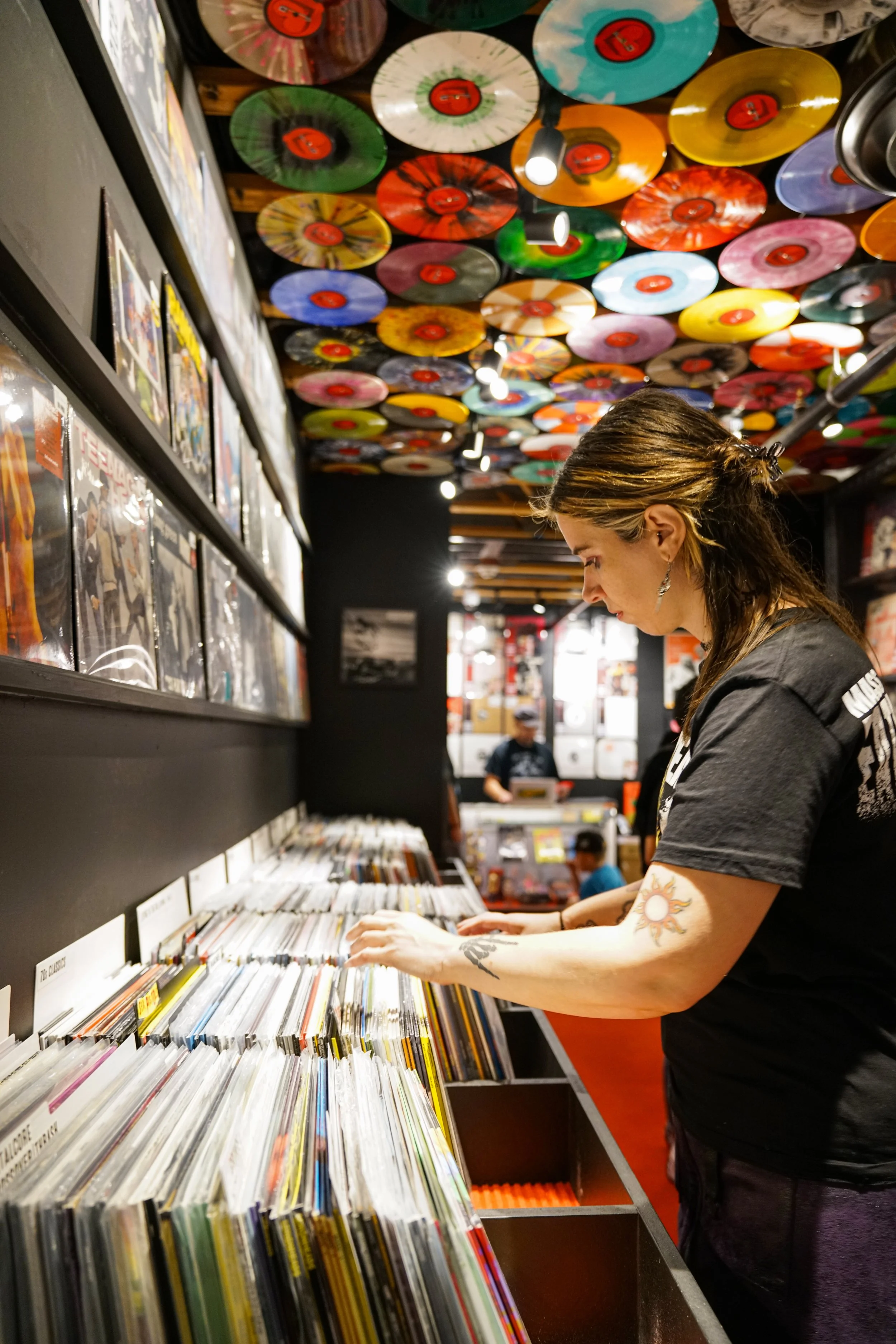
Kelly sorting through records in the Vinyl Threat record store in The Punk Rock Museum
After the shooting, confronting repressed memories unveiled a truth: I was more than my trauma. “My life has been in many ways characterized by psychological suffering. I've always kind of identified my psychological suffering or my trauma as being who I am, and I've moved away from that. I've done a lot of healing. I've done a lot of psychological integration, and it's made this return to punk even more beautiful,” Emily reflected. The inspiration we garnered from punk was something we paid forward. “Both punk rock and these critical theorists teach us to resist that colonized consciousness and to decolonize and free the mind,” she said. Once that occurred, “then the actions change, our interpersonal relationships change; our relationship with the social institutions that shape our lives change.” Educators played a crucial role in creating a positive learning environment and fostering diverse ways of thinking, with writing serving as an effective means to achieve this.
***
I used to be petrified of the notion of my work being published out of fear of judgment. I held a master’s degree and taught others how to write, but I did not see myself as someone with a worthwhile vision. After visiting the Punk Rock Museum for the first time, the words came pouring out of me like an endless well. By sharing my writing with others, I connected with more folks from the local literary community, like Shwa Laytart, co-owner of Avantpop Books & Publishing, alongside his wife, Sugar. We met at Red Dwarf, a dive bar tucked away in a quiet plaza off Vegas Valley Drive. Sitting down in a corner booth, wearing a white cut-off tank top with the Oddities and Curiosities Expo logo on it and drinking a pint of beer, Shwa said when first moving here from California, they witnessed “a really strong punk scene; it was a lot of young folks, a lot of older folks. Everyone respected each other.” Shwa pointed out Red Dwarf as one of his favorite haunts. “You see all these great punk bands that are local and travel here. For me, I think it's one of the coolest scenes.” Immersing himself in the community led him to see the bar as a locus for writers. “We do Doomed Poetry here, which is a dystopian punk rock poetry night. We've been doing that now for our third year, and that has been awesome because what we've discovered is the amount of talented young 20 and 30-year-olds that are doing effective punk rock poetry that's filled with activism and passion and anger.” Shwa also noted, “The same type of vibe that I love about the punk rock scene, the poetry scene here has too.”
The creativity and solidarity were what drew me to attend Avantpop’s events. “People from all walks of life coming together to celebrate art is the best part of the punk scene,” Shwa commented. “I go and hang out at the Punk Rock Museum, because I just love the vibe there. And then here, at the Red Dwarf, it's got the same kind of vibe. It's more of the local scene.” The community was something that he was grateful that he and Sugar had the opportunity to establish with the opening of Avantpop. “We're a specialty bookstore; we do punk rock counterculture stuff, and that's the kind of customers we got. It's a lot of fun.” Unfortunately, due to issues with the county and the lack of foot traffic in the Historic Commercial Center District, Avantpop was forced to close its doors in December 2024. However, it continued to host local events, such as author talks and book releases. Shwa added, “I'm glad that we built the customer base that we have now because doing these pop-ups, people come out for us. That's really nice because that keeps us going, and it keeps our soul really happy to have the same counterculture youth who don't have a place to go or feel heard can still now come to our pop-up bookstore events.”
Adrift and without a firm foundation to stand on in the aftermath of the shooting, the inviting atmosphere at Avantpop made me feel comfortable enough to express myself and rediscover my passion for writing. Shwa said, “I love that people come from all over to be in Vegas and they're intelligent and they're creative and they're unique, and Vegas gives them a place to be themselves.” The fellowship among artists reminded me that I did have a voice and a perspective that mattered, and it was up to me to use them for good.
***
Punk music taught me to be more empathetic toward others. The pain I endured was something I did not want anyone else to ever go through, so I tried my best to be compassionate. This bonded me with my friend, poet and former cop, Harry Fagel. Congregating at our regular hangout, Grouchy John’s Coffee, well-known for its array of Star Wars and Star Trek art and merchandise, he confessed a challenging upbringing with an abusive stepfather prompted him to rebel and seek out music, which provided the support he lacked. “It was girls, it was music, it was friends, and it was counterculture,” Harry explained.
In the mid-90s, the burgeoning arts scene of Maryland Parkway was where Harry met an “eclectic group of artists, subversives, and radicals,” which sparked his interest in writing. Singling out Café Espresso Roma as one of his go-to spots, he remarked, “They started doing open mic poetry there and I started to watch it, then I was like: I could do this.” As he worked up the courage to perform, those events were his “first lessons in crowd response and not letting your ego be buoyed by the people that care about you, but actually going out there and trying shit with strangers and new people and taking risks with your art.” Perhaps the most profound revelation I gained from my exposure to punk was not being afraid to take chances. Music and writing did not exist in a vacuum and they reached the innermost depths of the human soul.
As a police officer, Harry said, “I would read in briefings and I slowly but surely started to do other things involving writing for my peers and my colleagues,” he told me. “Instead of just writing for the world, I started writing for them. Then, as people died in my line of work, they started to ask me to write poetry for the eulogies and to memorialize, and I began to do that,” which resulted in Harry seeing a relationship between punk and writing. “I've written so many eulogies just for people that it kind of opened up a niche where my heart was connected to these folks' families and to their experiences.”
This reinforced Harry’s experiences and sensitivity toward others while it opened pathways to creativity and new ways of thinking. “It began to change the way that I absorbed the world—the way that I wrote it. It began to build blocks of empathy in me that hadn't been there before,” he said about honoring others, which I took to heart as I processed the events of Dec. 6, 2023. Devoting my efforts to my writing enabled me to carry on the legacies of the professors whose lives were lost. Amid the adversity he faced, Harry stated, “Punk rock was one of the things in the world that saved me from darkness. It showed me a way to, with a sense of humor and with a human spirit, to push back against the impossible.” When hope seemed outside our grasp, punk presented us with a way forward.
***
On a sweltering Friday afternoon, I returned to the Punk Rock Museum to take photos and enjoy the annual Punk Rock Bowling festivities. I started upstairs, examining a new photo installation from Edward Colver, contributor to some of the most iconic album covers in punk history, including Black Flag’s “Damaged” and The Circle Jerks' “Group Sex.” My first introduction to punk came from these records. Observing the art in person added another layer of emotional resonance. Nathaniel Shannon’s exhibit, “The First Ten Years: Saint Vitus Bar,” visually chronicled shows at the now-defunct Brooklyn, New York venue. Countless portraits and flyers lined the walls, with my favorite being a shot of Trevor Strnad, former frontman of death metal band The Black Dahlia Murder, and his battle jacket. This stirred up memories of my early childhood, when the roots of my love for heavy music first began to blossom. It all seemed like yesterday, and yet, now I was approaching my mid-30s. Tucked away in the back corner of the second floor is the museum’s latest addition: the Vinyl Threat record store, an intimate, perfectly crafted treasure trove for music fans to discover their latest find, containing a vast selection of test pressings, variants, and classic albums from every sub-genre under the sun.
Kelly interviewing Ceschi Ramos from CoDefendents at the Three Star Punk Bar (previously The Triple Down).
I moved downstairs to the exhibits marking the beginnings of punk, featuring artifacts from the Ramones, Blondie, and Iggy Pop, who connected deeply with my family history, as my parents, being young adults in the 1970s, had passed down their love of punk to me. The mementos in the museum kept history alive, transporting us to a specific place and time, as it captured punk in all its beauty and wonder.
The mural of H.R. from Bad Brains, part of the exhibit showcasing the American hardcore scene, was the ultimate standout for me. Immersing myself in the art emphasized the newfound vitality and enthusiasm I had achieved since the shooting. There were days when I doubted whether or not I had the strength to survive, but I channelled the power of punk rock and persevered.
***
A few days later, I came back to see the museum in full swing. Between guided tours, DJs spinning records in the Triple Down Bar, and performances in the Pennywise rehearsal garage, a twinge of anxiety fluttered inside me: would I be able to hold my own? Thinking back to my first time at the museum over a year ago, I knew once I was in the thick of things, I would be alright. Wearing a Napalm Death shirt with artwork from their “Mass Appeal Madness” EP, a stretchy purple mini skirt, and fishnets, I explored and took pick-up photos. Then I made my way to the outdoor patio, surrounded by a fence adorned with padlocks that customers could purchase and personalize at the gift shop. Wooden picnic tables were covered with Sharpie scrawlings.
Local group The CoDefendants were scheduled to play a release show for their new single, “The Right Wrong Man,” which featured Fat Mike of NOFX in the museum. Band member Ceschi Jones, who wore a striking black and white suit and matching fedora, expressed that the punk scene here was a “very welcoming community, and so many people come from all over the place. I’ve met people from all over the world.” The museum was the perfect meeting ground to come together and bond over mutual love for music—a “temple” and a “spot where we can all understand this subculture,” he asserted.
Honesty and acceptance drew Ceschi into the local scene. “At least in the movements I grew up and started to go to shows in, they always had strong beliefs,” he observed. Punk fans not afraid to challenge the status quo inspired me. “It was really key for me to develop my sense of ethics and what I stand for,” Ceschi said. Music reinforced the values in which I held dear were the fuel that drove me forward. Recounting the shows he attended in his youth, “they were more extreme than I’ve ever been when it came to animal rights, but it at least helped me question certain norms that are built into society,” in addition to, “those boxes that were formed for us,” echoed my thoughts about punk. It sparked the realization that it was essential to champion what made you unique and reaffirmed the genre as a gateway to cultivating a moral framework.
It was tempting for me to fall into a trap of apathy and indifference, considering the toll that mass shootings have taken on our collective psyche, but I could not let that be my reality. Hanging out at the Punk Rock Museum bestowed upon me a powerful lesson: for the sake of the victims of the Dec. 6 shooting, I had to embrace each day that I was alive.
Even as fear and self-doubt crept into my mind, taking risks and stepping outside my comfort zone was the only way I knew what I was truly capable of. Music binds humanity together and is a powerful, cosmic entity that transcends us all. I’m forever grateful for it, as it has given me a new lease on life and restored a sense of faith in myself and the world.
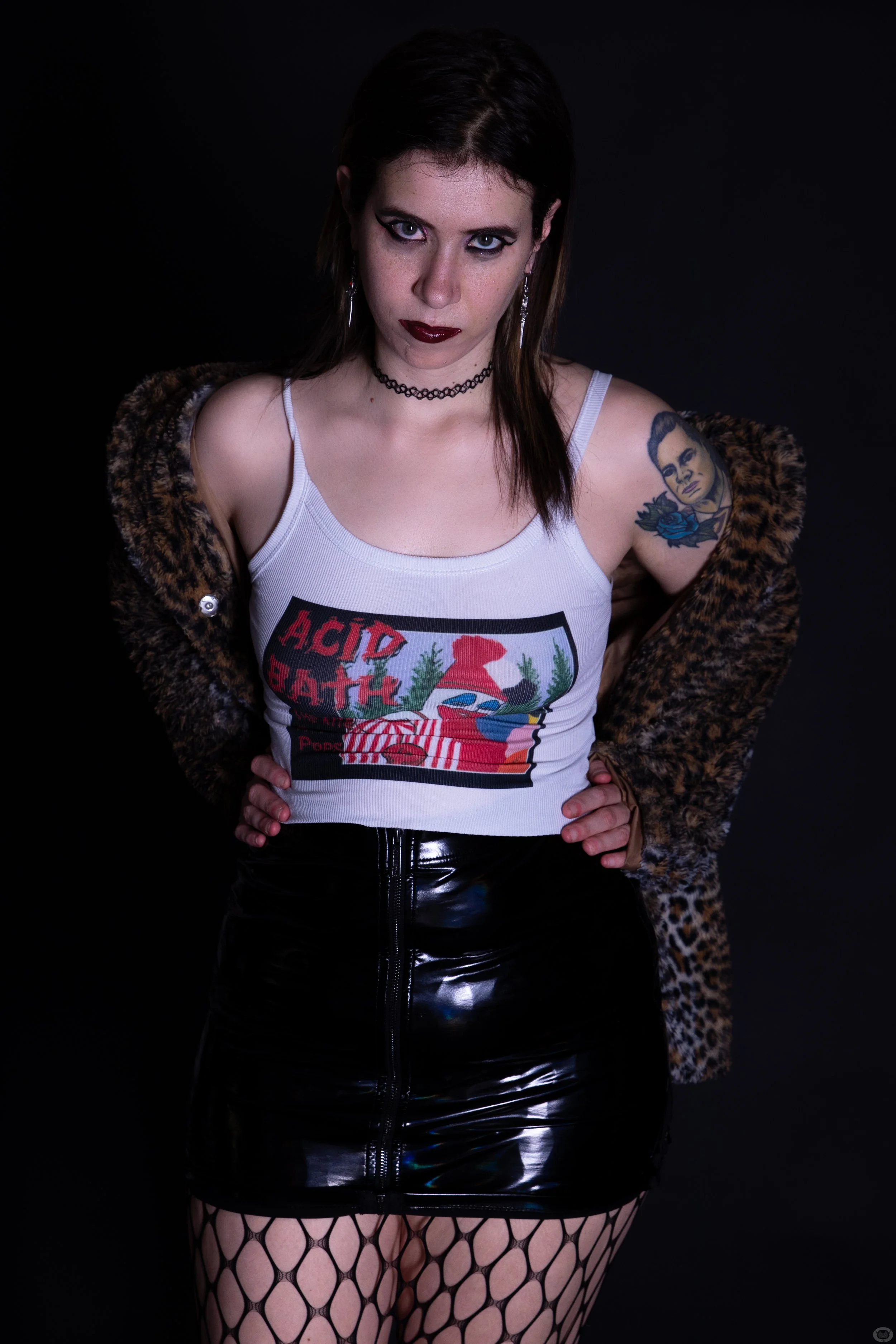
Kelly Stith is a part-time professor in English at UNLV and Nevada State University and does work in critical theory and adaptation studies. When she’s not busy teaching, Kelly loves going to concerts and watching David Lynch films.