Motels of Doom
And Their Exorcism-by-Wrecking Ball
By Lissa Townsend Rodgers
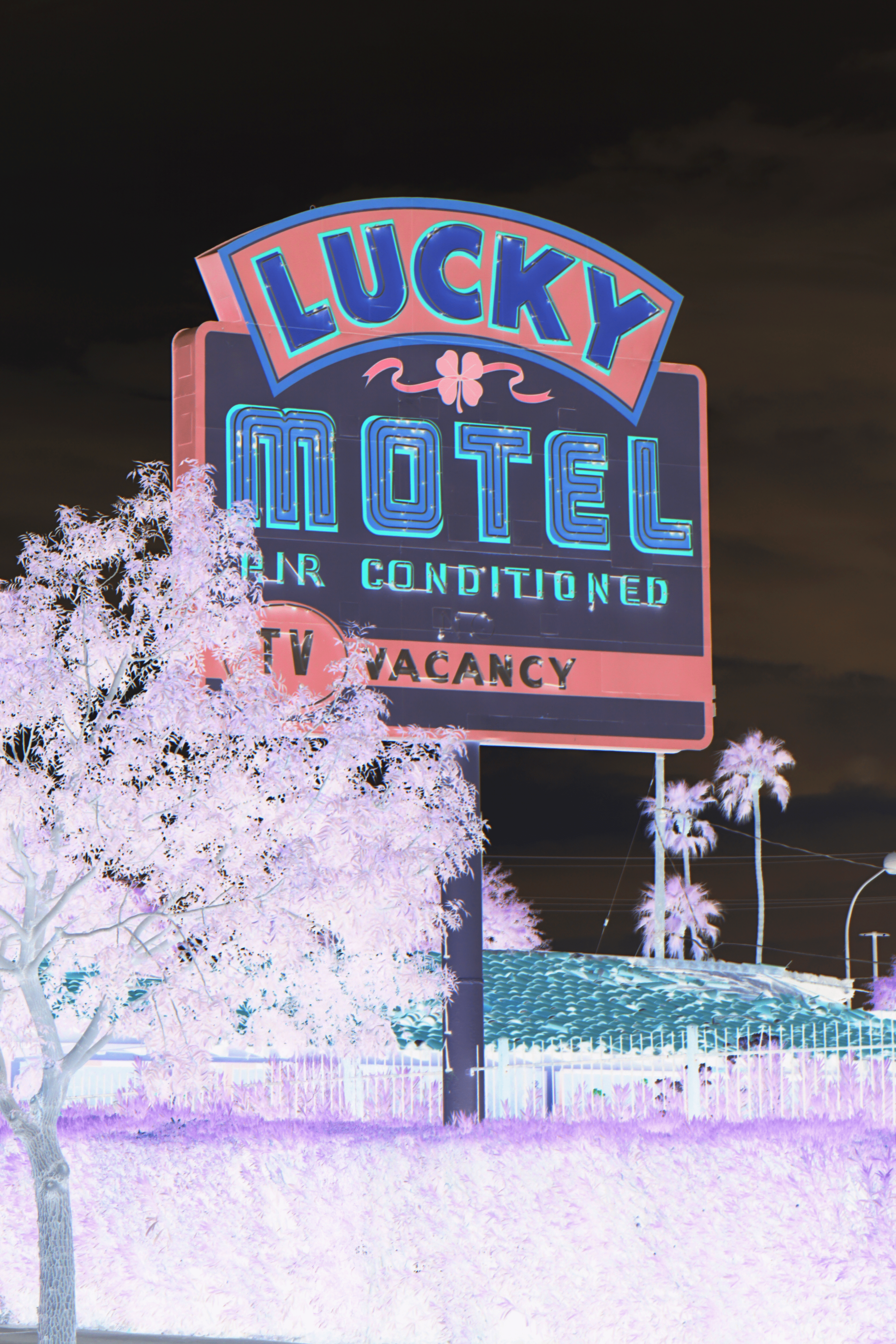
Lucky Motel by Juan Tangarife
There is something sinister about a motel. The buzzing neon signs, the weed-cracked parking lots, the squishy carpets and flickering televisions. Scary motel stories are their own YouTube genre, there’s been a number of video games based on trying to survive a night at a rundown motel. and, of course, they’ve been the setting of horror flicks ever since Janet Leigh’s convertible rolled into the lot of Psycho’s Bates Motel, through Motel Hell, Murder Motel, Clown Motel, No-Tell Motel and Hell House LLC.
In the past midcentury, motels had a much more wholesome reputation. Road-tripping families could park right outside their room door and unload the kids and the Samsonite suitcases for a fun-filled fling before returning home to their suburban split-level home. Las Vegas once had over a hundred of them, from the Boulevard to Boulder Highway, luring travelers with glittering signage and shimmering pools.
But as the years passed, mom-and-pop motels’ customers began to prefer chains, high-rises and multi-amenity resort-casinos. Motels slipped into decline, many closing and most of those that lingered on began to drift toward dive status. The edge-of-town roadside locations became less about easy travel and more about wanting to remain below society’s radar. The temporary accommodations that were once a symbol of footloose adventure, often became a sign of transient desperation.
And, much as the Las Vegas motels had featured extravagances like three-story starburst signage or Olympic-sized heated pools, so their decline was excessive. Many switched off their lights and padlocked their gates, “for sale” signs collecting graffitti. Others became the sort of ominous setting seen in the video games, horror movies and crime podcasts—a place where some guy drags a dead body out of his room and dumps it in front of another before disappearing into the night, as happened at the Desert Star in 2018.
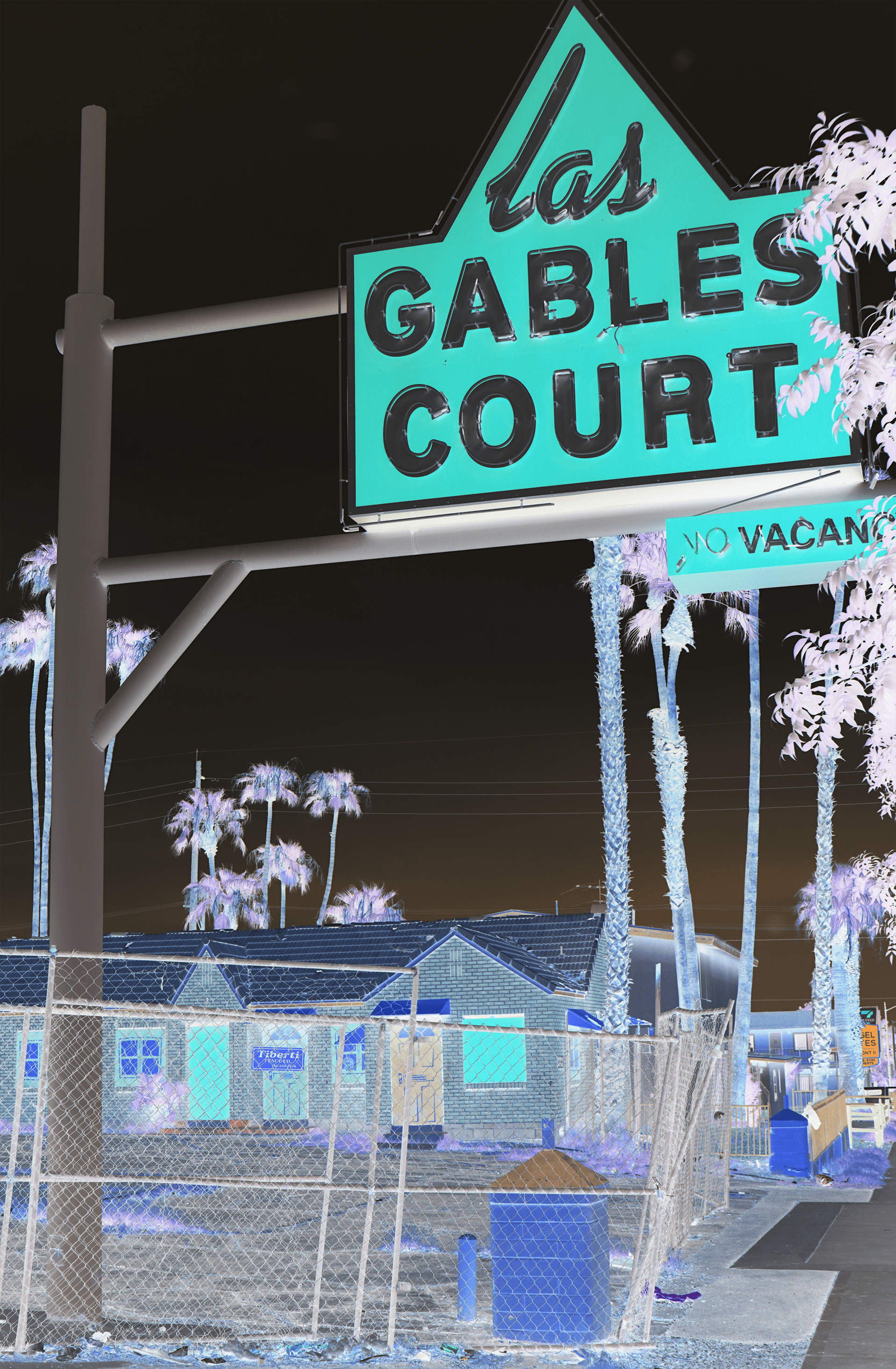
Las Gables Court by Juan Tangarife
One of the most famed creepy Vegas motel tales occurred in 1988 at the Del Mar Motel. The bulbs were out in the once-glorious Betty Willis-designed sign, but the backlit ad for in-room porn movies still glowed. Pati Margello, equal parts hooker and hustler, went there believing she and a friend were going to get high with a couple high rollers.What it actually was, was a setup at the behest of her boyfriend’s rich family, who didn’t approve of the company he was keeping. Pati was beaten, strangled and stuffed into an air conditioning duct, to be smelled and then discovered by housekeeping three days later.
The La Concha Motel was designed by architect to the stars, Paul Revere Williams, in 1961 and hosted celebrities from Ann-Margret to Muhhammad Ali. Forty years later, the shell of its Googie glory was visited by a distinctly more downmarket and sometimes dangerous clientele. One early-aughts spring day, a multiple-murderer methhead named Scott Dozier dismembered a man in one of the rooms. In an act of performative psychosis that even Wes Craven or Eli Roth might find excessive, Dozier even invited folks to the room to view his work-in-progress in the bathtub.
One of Las Vegas’ most gruesome crimes was the Orbit Inn explosion of 1967. One January night, a chronically AWOL young soldier bought a few dozen sticks of dynamite back to his motel room and shot them with a 22-caliber pistol. The force of the explosion collapsed floors, tore off roofs and sent balconies tumbling into the swimming pool. Some said it was a murder-suicide over infidelity, others said it was an accident, but the man, his wife and four other people were killed. Police crawled about the wreckage gathering body parts and stuffing them into garbage bags like wrapping paper after Christmas. A woman’s leg was embedded in a cement wall; a human head was discovered in a nearby alley.
Sometimes the death is not macabre, but mysterious, perhaps leaving a restless spirit to roam the fluorescent-lit halls in search of justice. In 2008, local celebrity “Buffalo” Bill Barrier was found dead on a bed in a room in the Motel 6 on Boulder Highway. A motel that had never had any shiny signs or clinking coins to draw travelers—just anonymity and privacy at reasonable rates. The death was ruled accidental, chalked up to a combination of valium, cocaine and heart failure…but his family questioned why a publicly sober man was found with drugs, his friends spoke of legal battles with sketchy characters and the motel records showed that another guest entered the room minutes before Jim did.
So, with all of this death and tragedy, are the motels of Las Vegas haunted? For the most part, a policy of exorcism-by-wrecking ball has been applied, with any lingering ghosts removed with the rubble. One of the last remaining Las Vegas Strip motels is, coincidentally or not, the one that is most rumored to host paranormal activity: The Oyo, formerly known as the Oasis Motel. A narrow entrance flanked by a smoke shop and a storefront wedding chapel leads to a parking lot of molting palm trees and a low, dust-colored building—it doesn’t seem like the kind of place a World Series of Poker champion or television star would get a room.
But in 1998, legendary professional card player Stu Ungar checked in. Ungar had made millions over several decades of holding and folding, but the partying he did when he was away from the tables had devoured it and he was living in hotels and motels. When he didn’t check out, staff entered the room and found him dead on the floor. While there were drugs in his system, it wasn’t a fatal dose: the cause of Ungar’s death was, basically, his life.
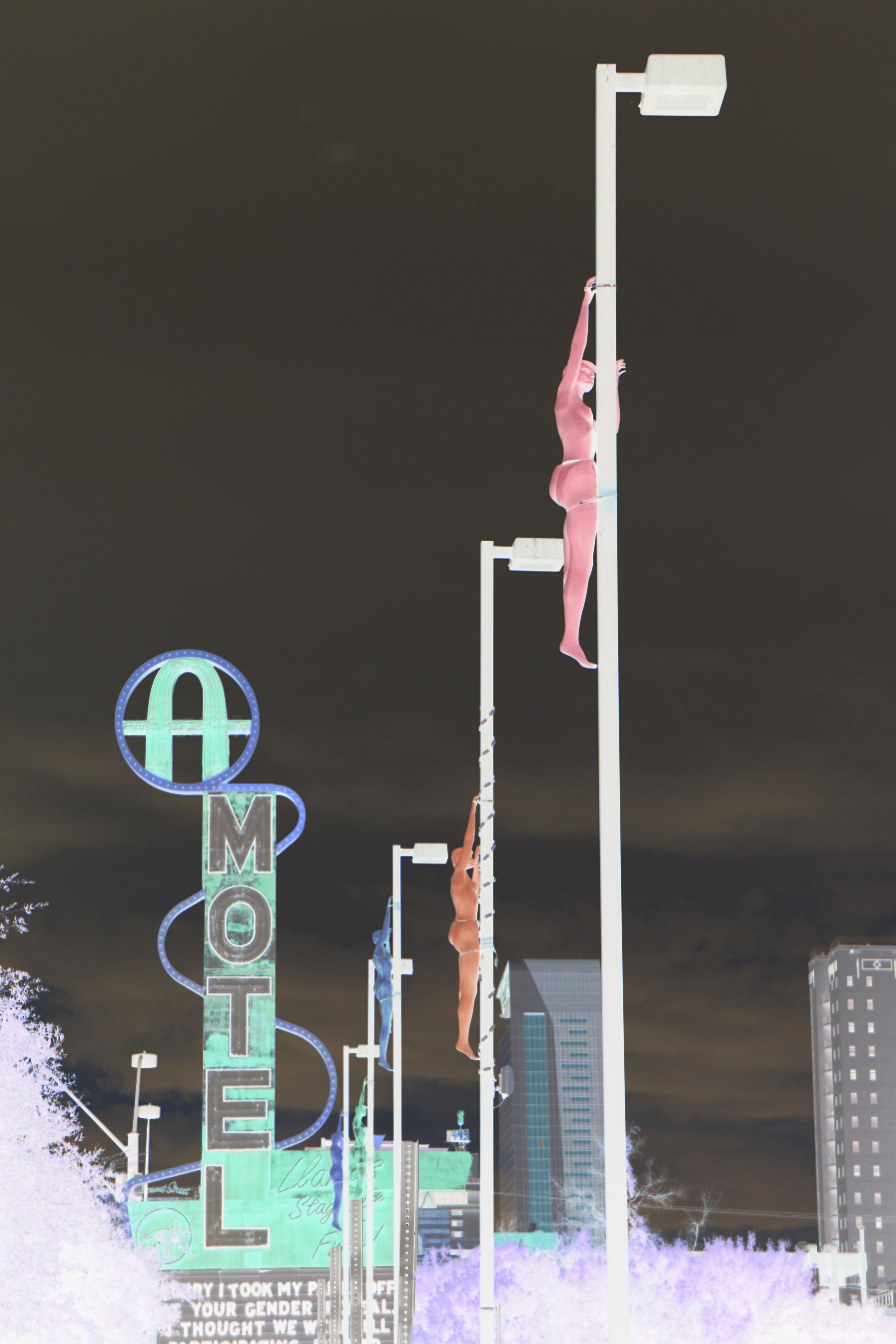
The Climbers by Juan Tangarife
Six months later, actor David Strickland also found himself shelling out the nightly rate at the Oasis, six-pack in hand, likely something stronger in his pocket. Strickland had a recurring role in a hit sitcom and parts in upcoming movies, but he also had issues with addiction and mental illness. He’d been in recovery and on medication, but had recently ditched both and was partying in Las Vegas with comedy's grim reaper, Andy Dick. After checking into the Oasis, Strickland called one of the “girls to your room” this town is known for, drank his beers and, then, hung himself with a bedsheet. Paranormal entrepreneur Zak Baggins claims to have communicated with Strickland; he used an alleged recording of the actor’s spirit on a song he did with 90s noise-house act Lords of Acid. There have also been stories of guests being tapped on the shoulder or a general feeling of unease… a feeling that may have as much to do with the dark parking lot of molting palm trees and barren
While each of these stories ends in horror, the beginnings also make you want to cover your eyes and shrink back in your seat. Whether a sudden catastrophe or slow crush, there was no doubt plenty to fear on whatever twisted path led to sliding a few twenties through a hole in bulletproof glass and lying down on an unwashed bedspread, staring up at the stains on the ceiling, listening to the unhappy sounds through the thin walls.
Still, it cannot be denied that some motels of Las Vegas possess ghosts that linger long after both the patrons and the rooms have been reduced to dust. Their neon signs have been restored and installed on poles along downtown medians—Lucky Motel, Domino Motel, Pair-A-Dice Motel, Fun City Motel, all freed from their earthly duties to float high above the street, disembodied spirits of a past that, while fabulous, was not without its frights.

Lissa Townsend Rodgers is a native of New York City who has lived in Las Vegas for two decades. She has worked as a journalist in both cities for publications including New York Magazine, Food & Wine, Desert Companion, Vegas Seven and Culture Trip. She has given lectures and appeared on panels at the Mob Museum and the Clark County Library. Her book, “Shameless: Women of the Underworld” is a series of biographies of gangster ladies that recently came out on Huntington Press.