Even Mythical Creatures Need a Safety Net
The Balancing Act: Shenea Stiletto on Circus Arts & Advocacy
By Jennifer Battisti | Photos by Tyler Boshard
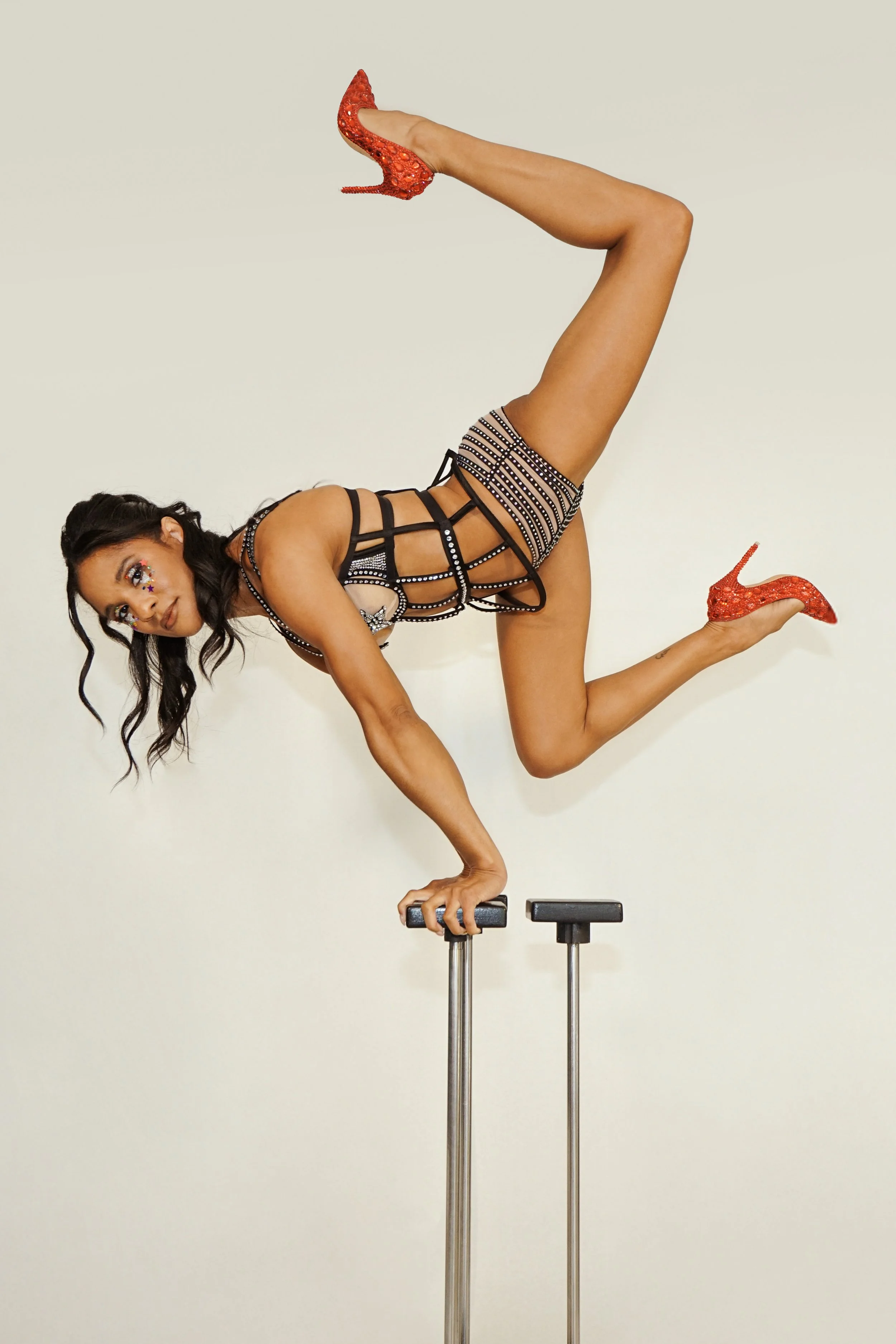
Growing up in Las Vegas, I have a deep appreciation for the performing arts and entertainment industry. I’ve worked in box offices for Siegfried & Roy, Danny Gans, and more, and seen dozens of shows on the Strip — none more spellbinding than circus shows such as “O”, "Mystère" and others where reality is suspended in a kind of neon ether, while we’re transported into beauty and athleticism unlike anything else.
As a city, we are fortunate to have such a large concentration of virtuosos to add imagination and depth to our lives, and the lives of the forty million-plus tourists who visit Las Vegas. Behind all of the stunning visuals and theatrical storytelling are workers, like you and me, who are entitled to equality and safeguarding. From basic rights like paid maternity leave to specific adaptations such as medical care uniquely customized for the bodies of performers, the circus arts have been largely undersupported. Until recently, no one has been asking questions about how to better support the circus arts industry, but one small yet mighty woman is speaking out and showing up.
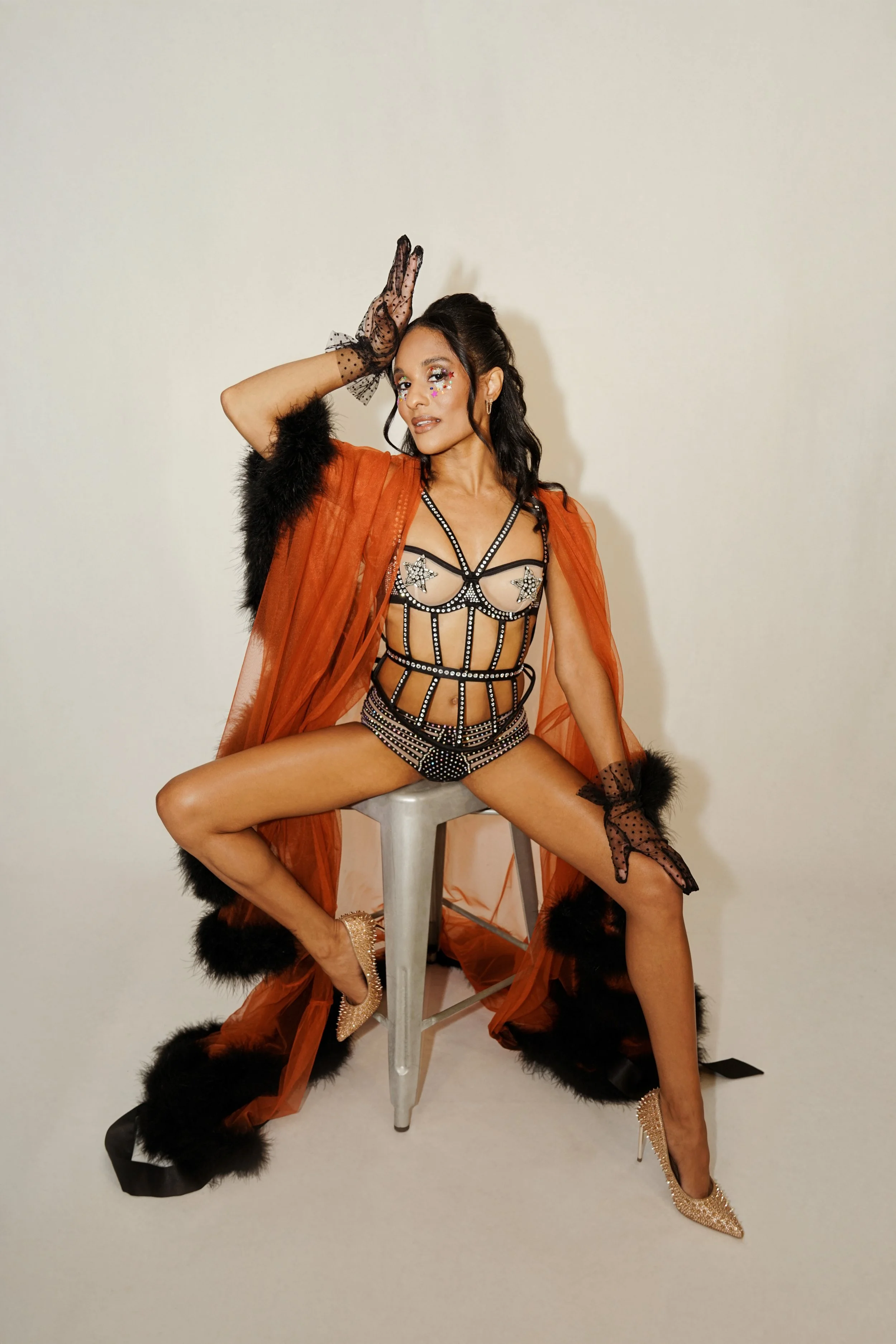
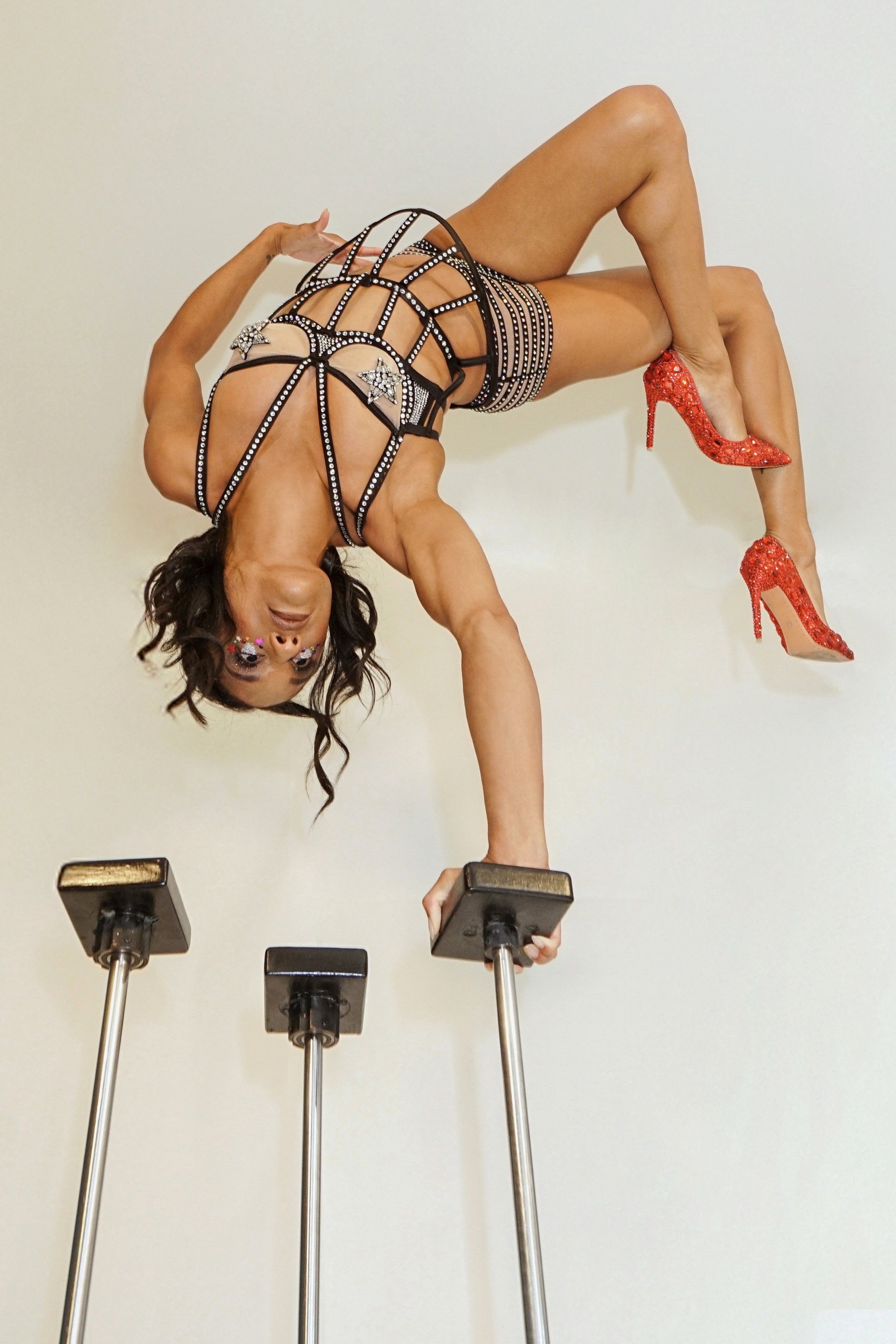
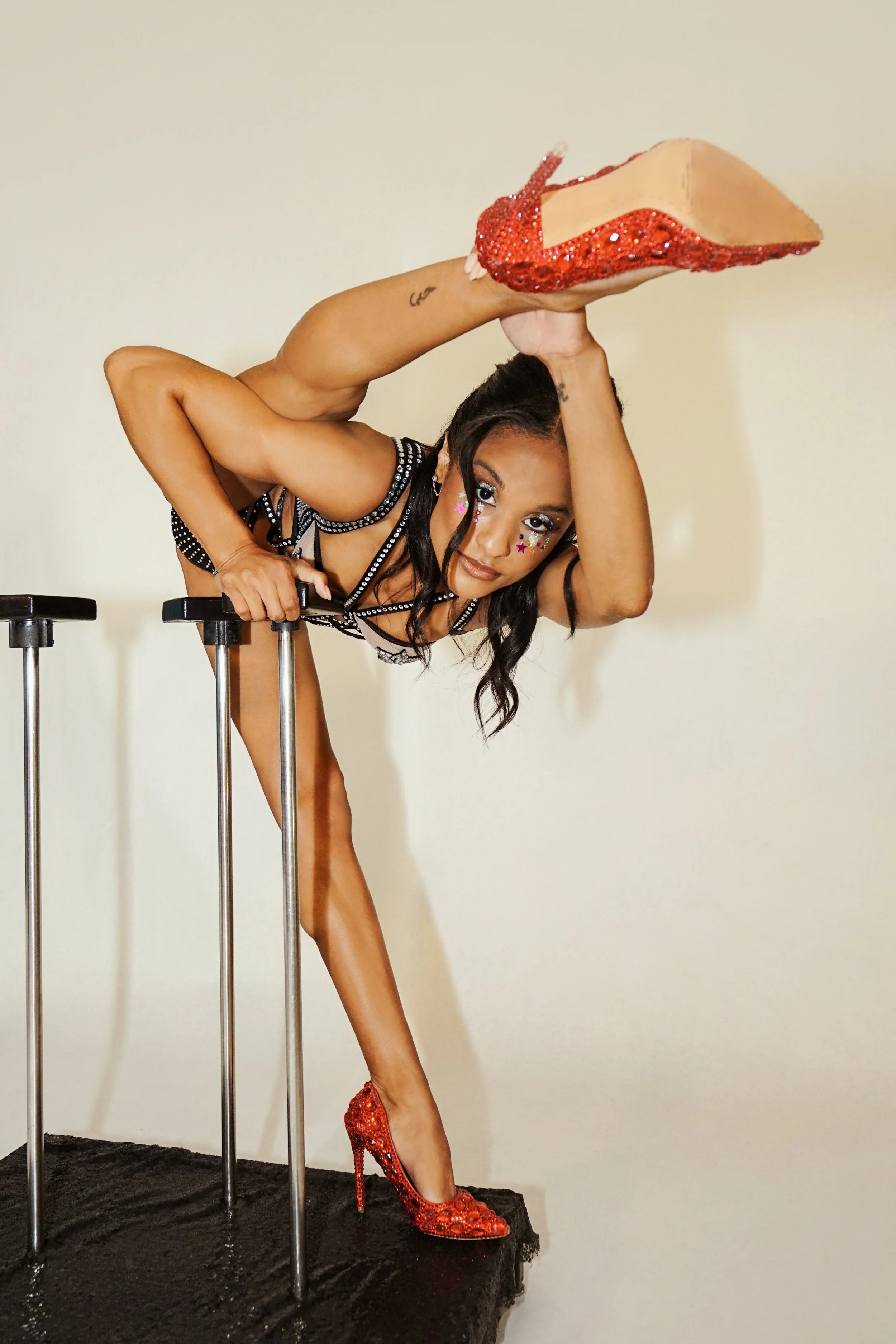
Before meeting Shenea Stiletto, I listened to her podcast, “Circuspreneur”, which both captivates and educates listeners on the circus arts industry, as well as the advocacy efforts and accomplishments of the Circus Arts Guild of America, which Shenea founded. Her mission is to create initiatives and introduce policy to support circus artists in gaining access to rights, protection and visibility — all while single-handedly maintaining equilibrium performing in the circus arts industry as a world-class hand balancer for Cirque du Soleil.
We talked at Cafe Lola’s, one of Shenea’s favorite coffee houses. The vibe is Instagrammably indulgent with plenty of photo backdrops oozing with pink roses and tea party charm. She ordered a crème brûlée latte with shavings of 24-karat gold perched in whipped foam. She was excited that this drink was sans sugar but not sans flair, as most coffeehouse drinks are. She joked that ordinarily, she has to take a picture, then scoop all the fancy off the top. She’s funny and instantly likable.
She had just returned from performing at the Electric Daisy Carnival (EDC), where she tried to find solace from the perpetual “ntz-ntz-ntz” by meditating in an igloo — aka the Moon Glow Shiftpod, a festival shelter system. When I asked her what helps her wellbeing the most, she didn’t miss a beat, “A strong spiritual core.”
Shenea is two-time World Acrobatic Gymnastics Champion and USA Gymnastics Hall of Fame Member. You might be wondering about the difference between regular gymnastics and acrobatic gymnastics. Shenea broke it down for me: Regular gymnastics includes all the apparatuses, i.e., uneven bars, beam, vault, etc., whereas acrobatic gymnastics is an apparatus-free, partnered art form. I imagine it as a highly complex, unending trust fall — perfected and performed by skilled humans personifying athletic surrealism. If you’ve been to a Cirque show, you were certainly moved by the unified defiance of physics, the mastery of union and strength. Acrogymnasts use only the floor, and one another, as their artistic space. The whole is more important than the individual, which Shenea said has “softened her heart.”
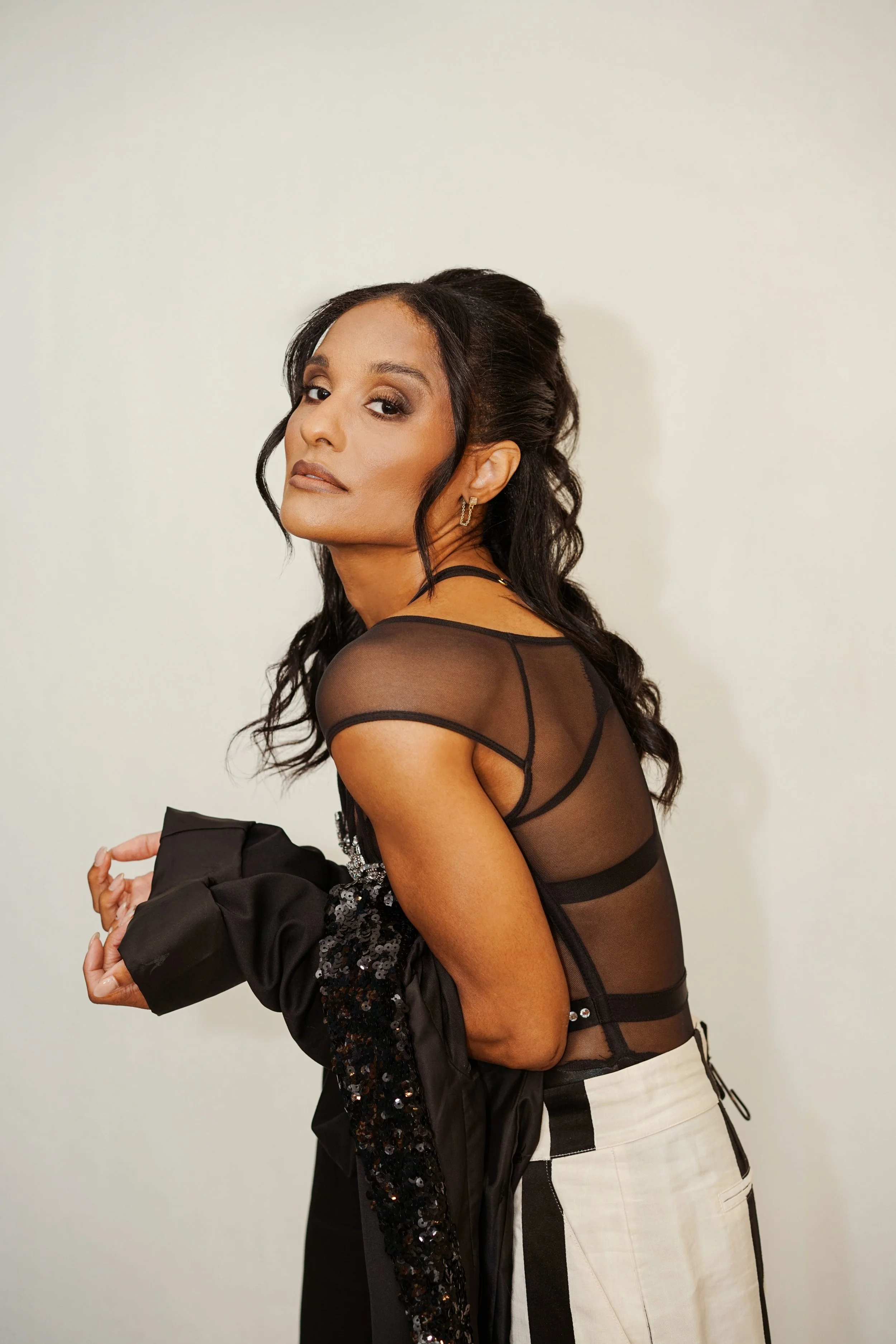
In 2024, Shenea was one of the first-ever Circus Arts Industry Roundtable Panelists & Strategist at the White House. The discussions covered aspects like increasing safety regulations through initiatives like SafeArt and SafeCircus, and labor rights for circus workers, among other things.
“We are an industry. We are workers,” Shenea says, although there are still misconceptions about circus arts.
“It was not simple to go from, ‘We would love to see you perform,’ to, ‘this is going to be a conversation about labor rights,’” she tells me, while adding, “Circus artists need to be seen less as mythical creatures and more as regular workers who want benefits, a retirement account, paid maternity leave and quality insurance that doesn’t deny us coverage. There is no pay scale, no wage protection, no contract negotiation protection.”
It’s almost as if the success of illusion has become an obstacle to reality. Circus artists are more vulnerable to injuries, risks and recessions, with some performers making close to minimum wage. The hope was that Nevada would be a trailblazer in terms of sponsorship, given that there are more circus performers here than anywhere in the world. Several of the big Las Vegas corporations that were asked declined to sponsor. What the trip to D.C. lacked in support, it made up for in determination. Shenea made clear that disappointment was not defeat — and like circus, an intermission isn’t an end but an interval, a time for nourishment until the show resumes.
Shenea began acrogymnastics in San Jose, Calif., at the ripe old age of eight, training under her beloved coach, Nikolay — who was an incredibly devoted mentor and human, who, even through late-stage cancer and chemotherapy, showed up to the gym to continue to train Shenea and other acrogymnasts.
“He set me up to be a world champion,” she says.
His passing was immensely impactful to Shenea. Grief almost halted her training completely, but through therapy, she was able to continue her journey.
Talking about advocacy would be incomplete without addressing the toll of prolonged activism on our mental health. Shenea’s advice? “Please don’t burn yourself out!” She was emphatic that burnout doesn’t have to be a part of activism. To prevent stress and cynicism, which can eventually lead to disengaging from the movement entirely, Shenea attributes meditation and therapy as crucial to her well-being. Preventing activism burnout, Shenea thinks, has largely to do with being deliberate with our energy.
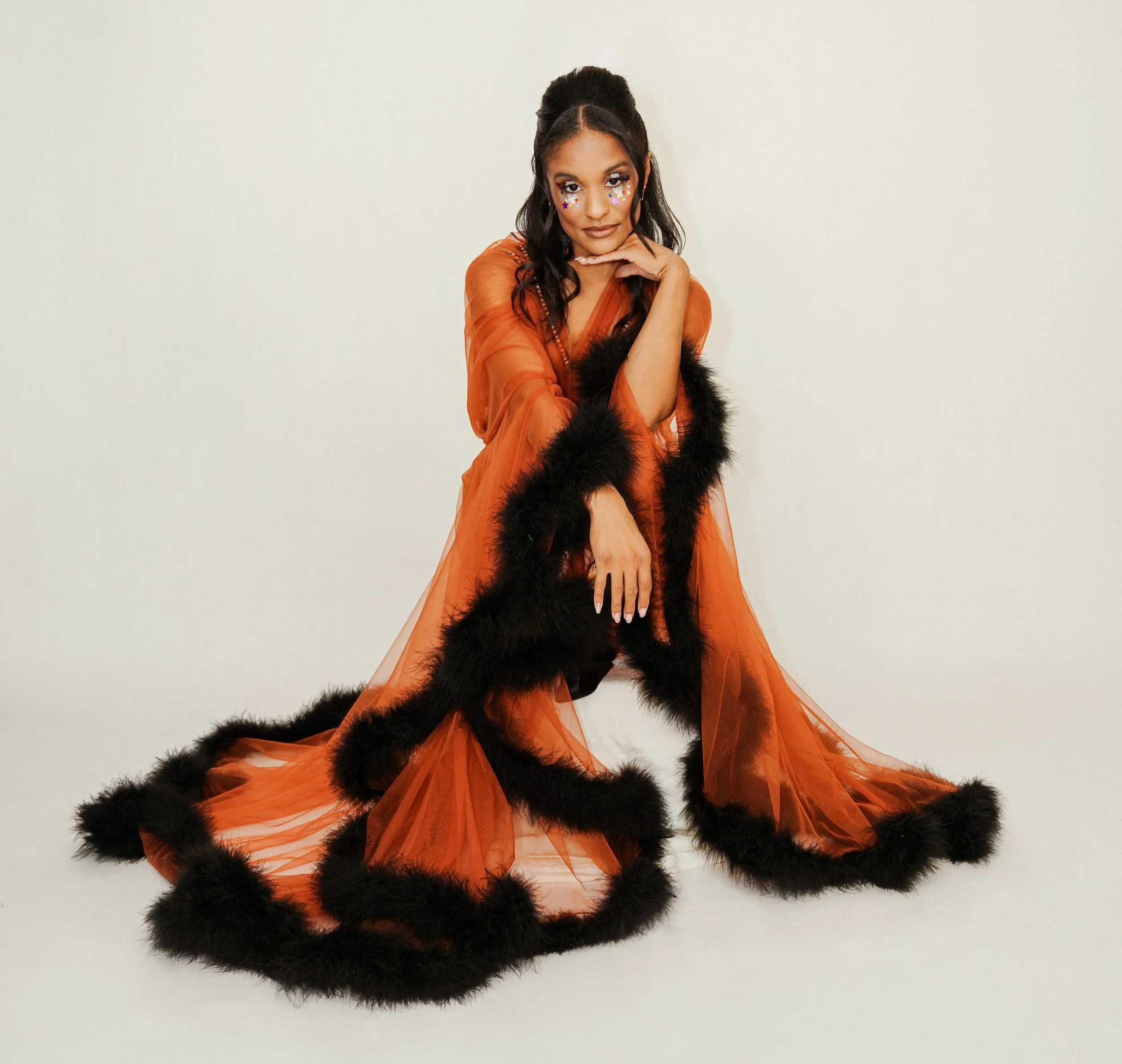
“Timing is everything,” Shenea shared, adding, “When timing is right, we should utilize the door that is open. “We don’t sit back, we harness our energy, because activism is a long game.”
She explained that it could be another four to eight years before that door opens again, but in the meantime, she advises, “Take care of yourself; have an identity outside of the cause.”
How can we as a community support and protect the circus arts industry? Shenea has simplified the process so that pitching in is no big feat. You can find an easy-to-follow template on how to contact your local representatives on her podcast, “Circuspreneur” (episode title: “How To Contact Your Reps”), as well as a wealth of additional information and resources. We can also sign and share her petition: Tell Congress to Support the NEA in Recognizing the Circus Arts as an Official Art Form.
What’s next on the agenda for Shenea? She’s thrilled to be attending the Performing Arts Medicine Association (PAMA) conference in Washington D.C to introduce policy that includes the circus arts industry in the incredible medical research being done to create accommodations exclusively for dancers and performing artists. This organization collects data on industry-specific injuries and degenerative diseases to allow artists to continue to work and create art.
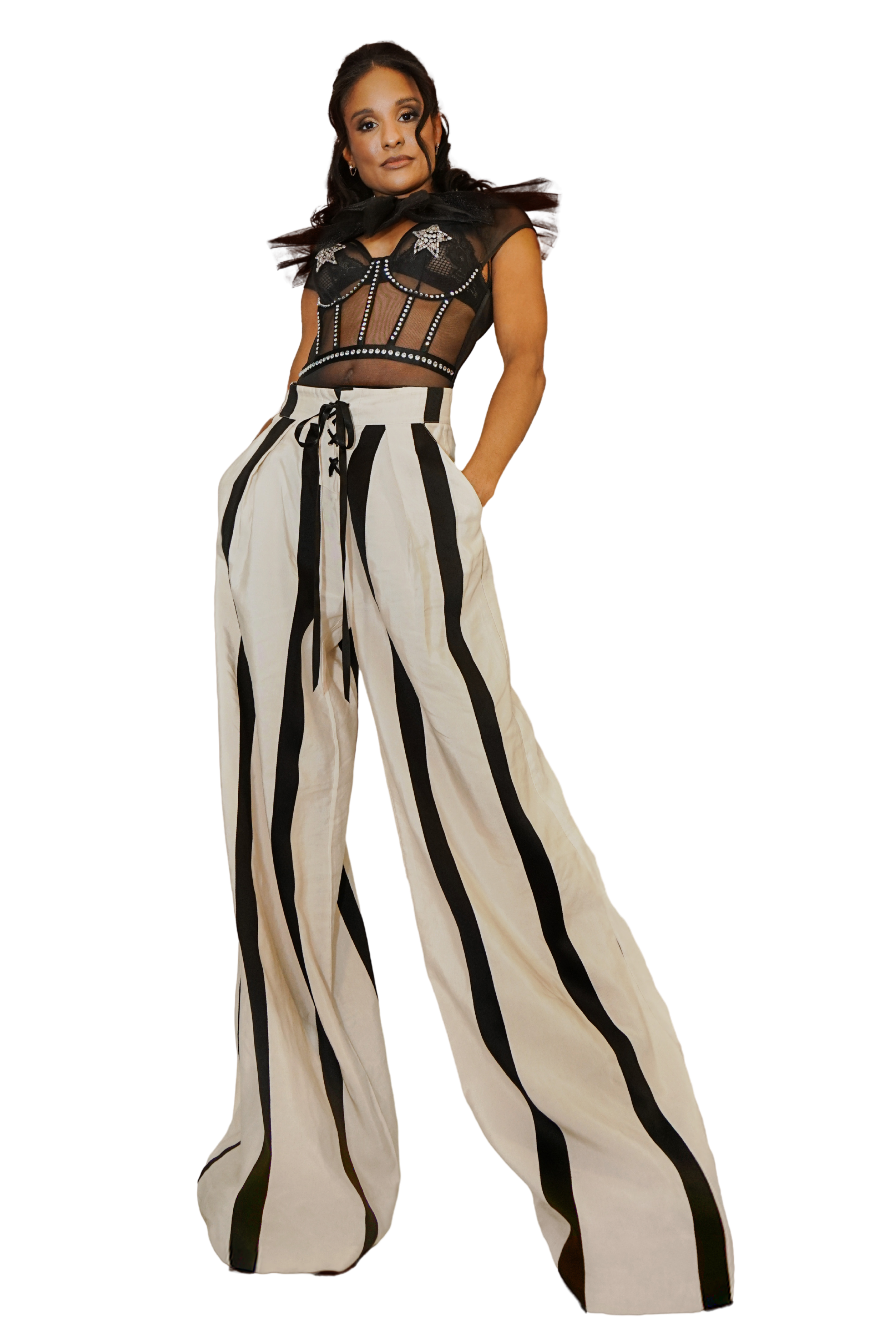
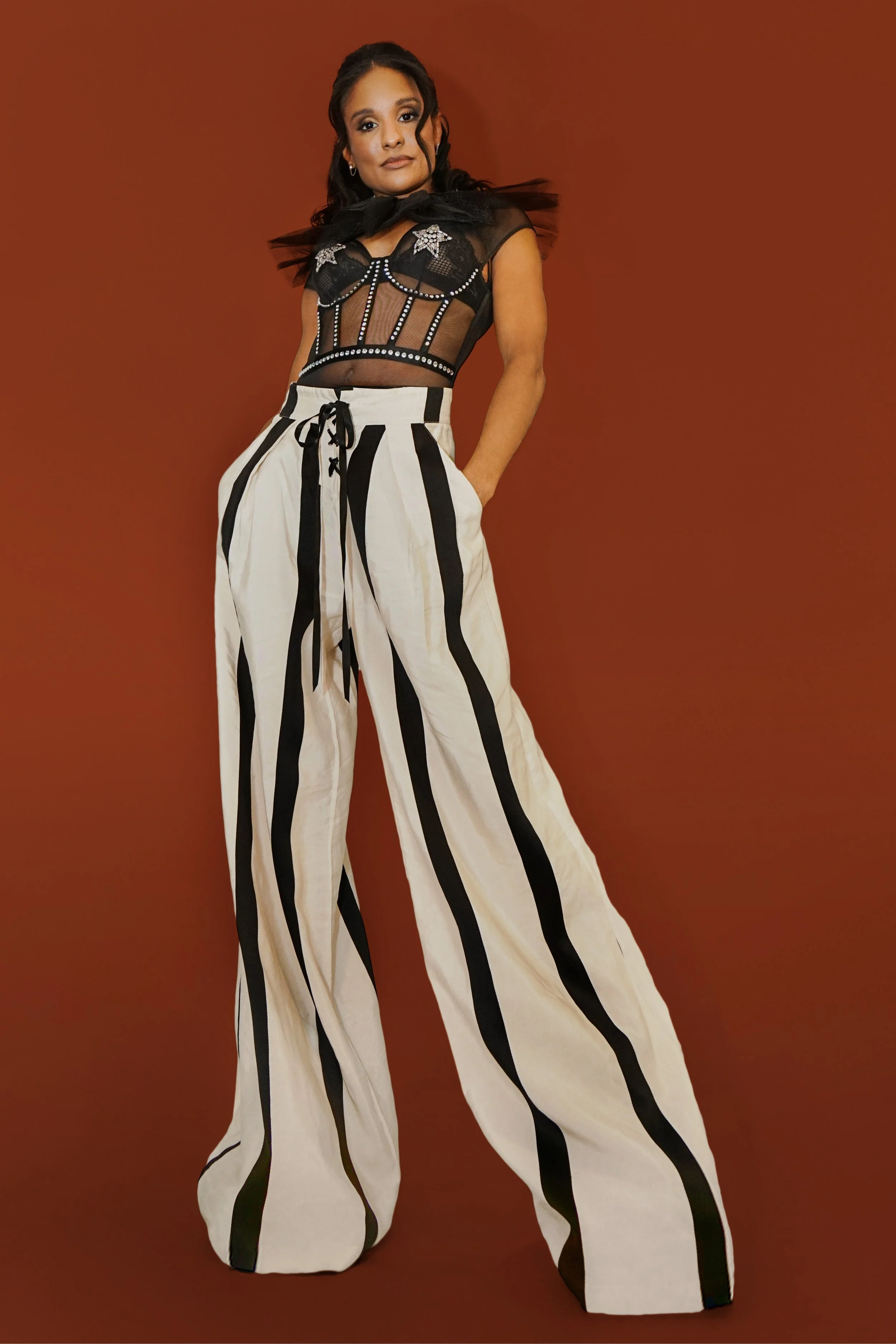
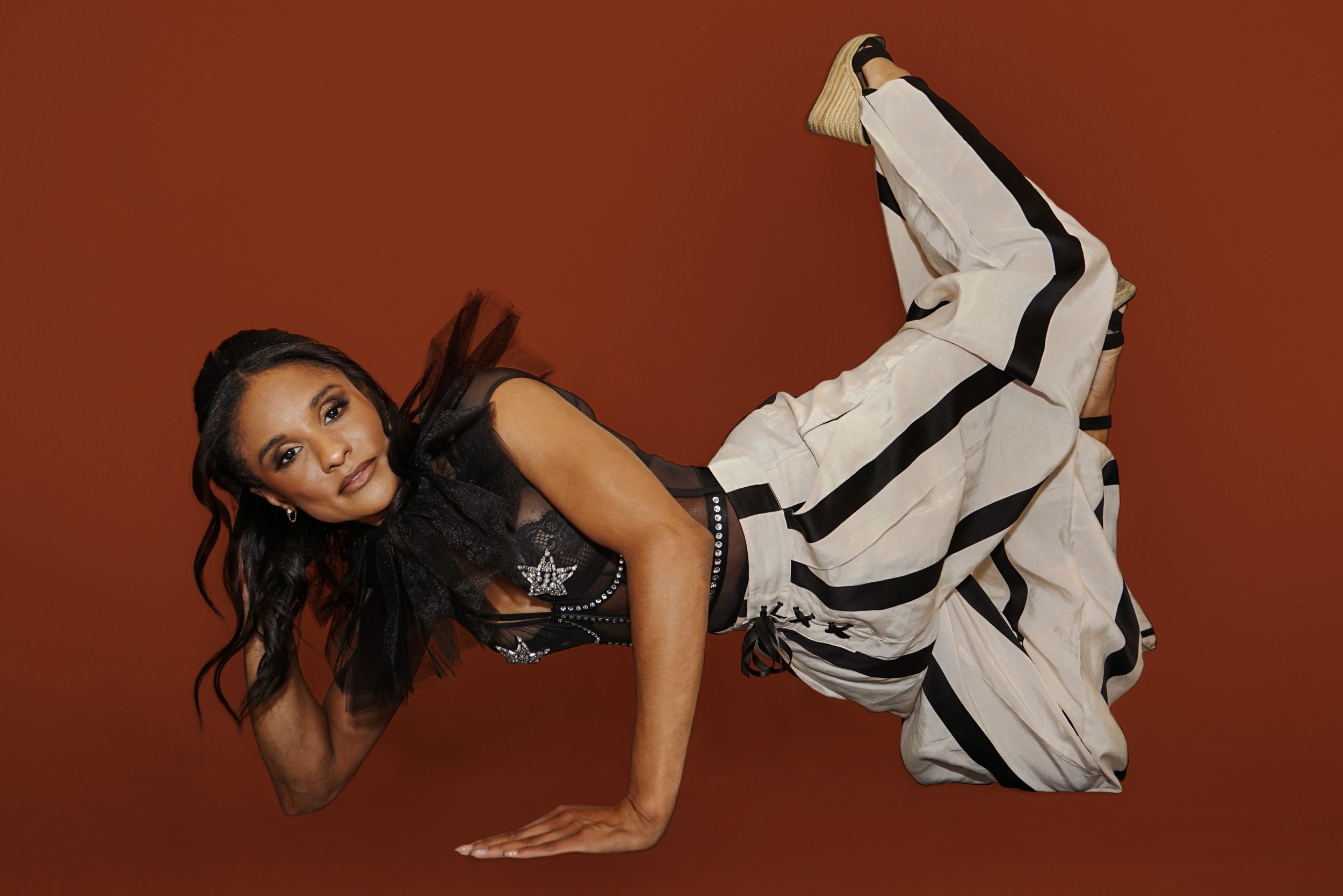
Shenea Stiletto styled in Paige Pants.
In a world where art is under supported and often minimized for its meaning and contribution to life, efforts like these and people like Shenea are vital to the future of the Arts. What would the world be like without wonder, without the inexplicable joy of shared imagination—without circus artists, equally mythical and real.
Social Media: @sheneastiletto
Circuspreneur Podcast Host
Think Like An Acrobat StageLync Series
Circus Cities StageLync Series
Contributor @StageLync
www.Circuspreneur.com
Please consider Signing our Change.org Petition Seeking Circus Arts Recognition in the U.S: https://www.change.org/CircusArtsRecognition
YouTube Channel:https://youtube.com/c/SheneaStiletto

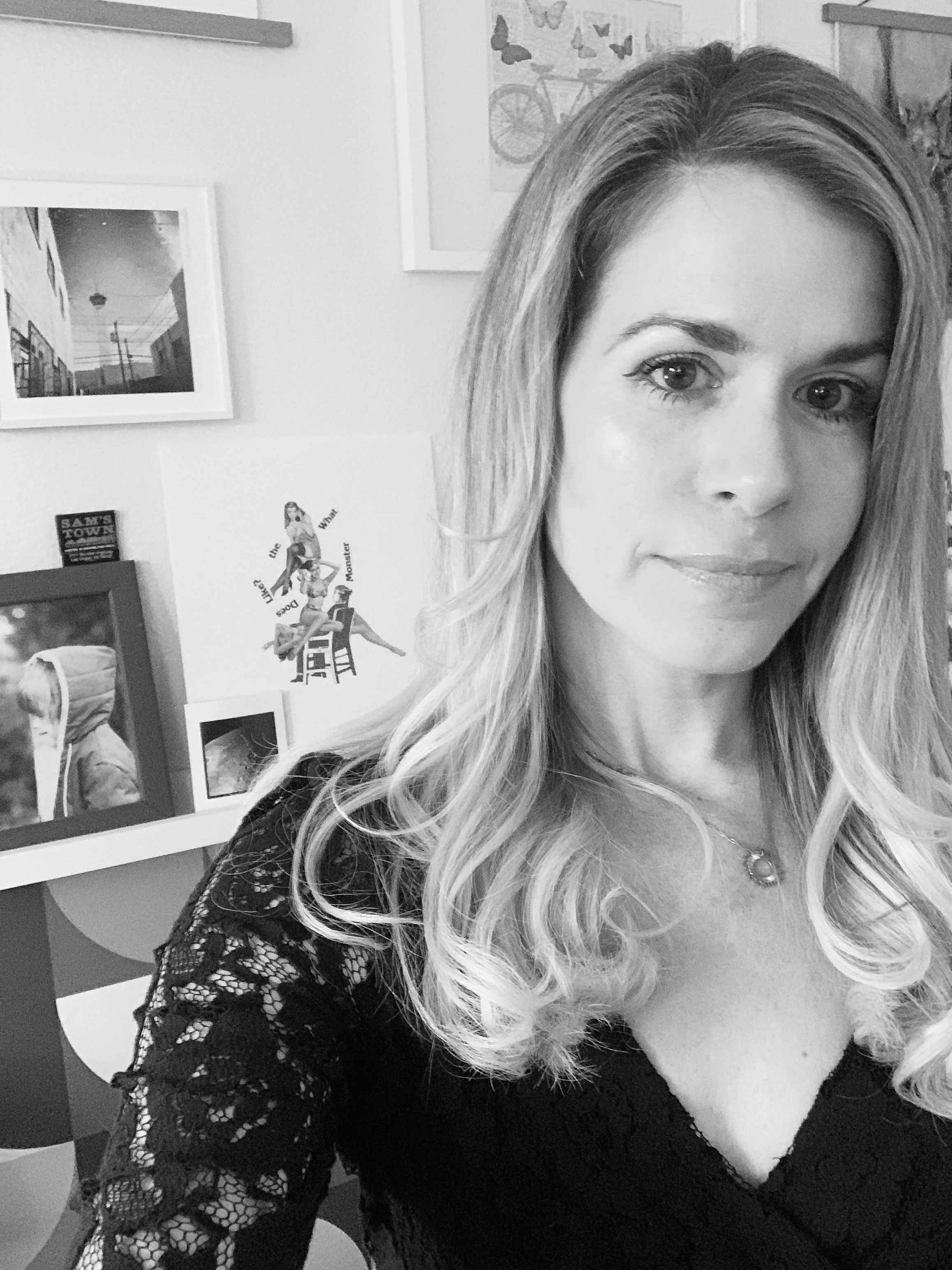
Jennifer Battisti is a lifelong Nevadan. She is the author of Echo Bay and Off Boulder Highway
(Tolsun Books) You can find her at jenniferbattisti.com